
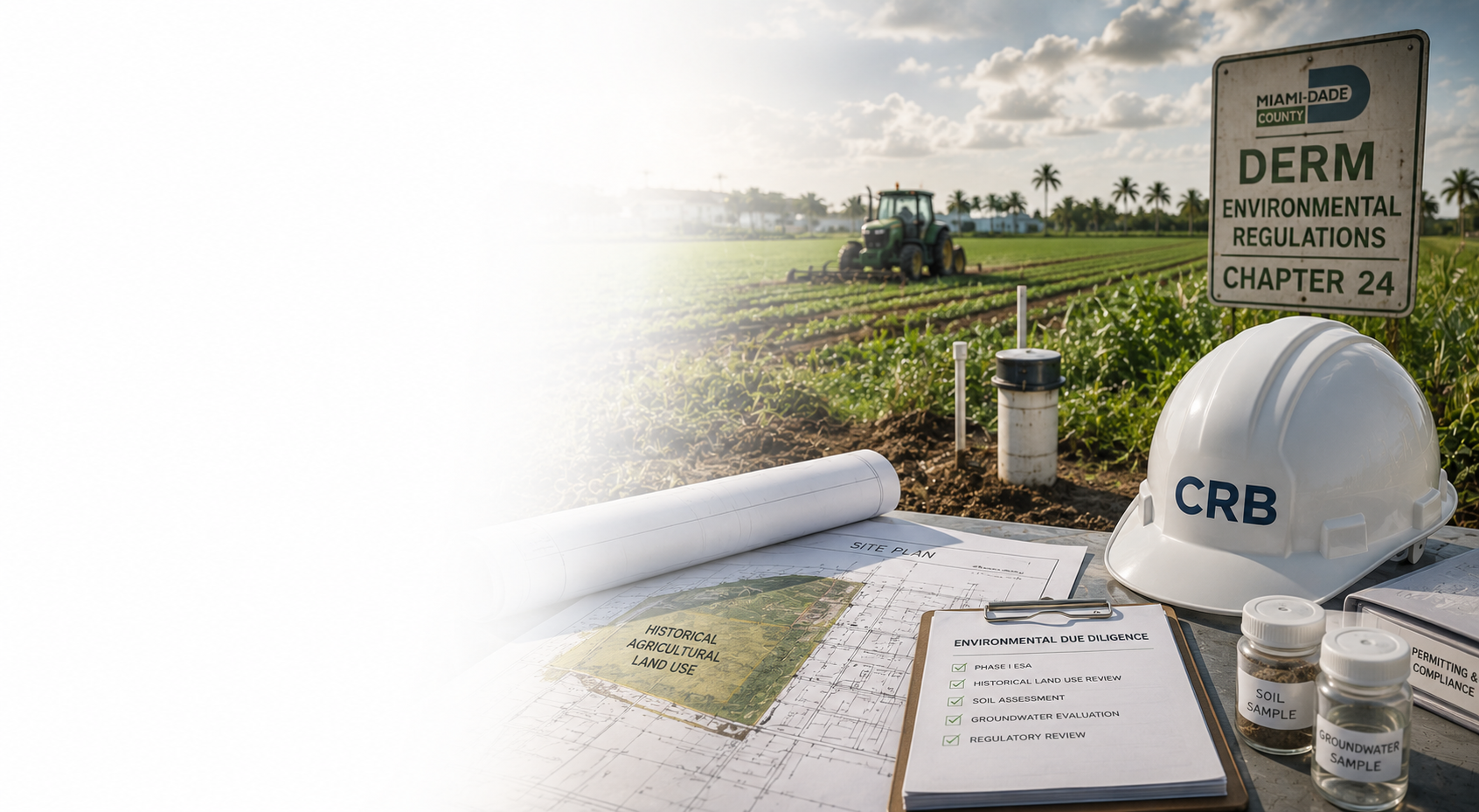
What Is Chapter 24 Environmental Review in Miami-Dade?
Chapter 24 environmental review in Miami-Dade refers to environmental requirements connected to Miami-Dade County’s Environmental Protection Ordinance. The County states that Chapter 24 was established to protect water quality, drinking water supply, air quality, natural resources, residents, visitors, and the local ecosystem.
Why Chapter 24 Matters for Redevelopment Projects
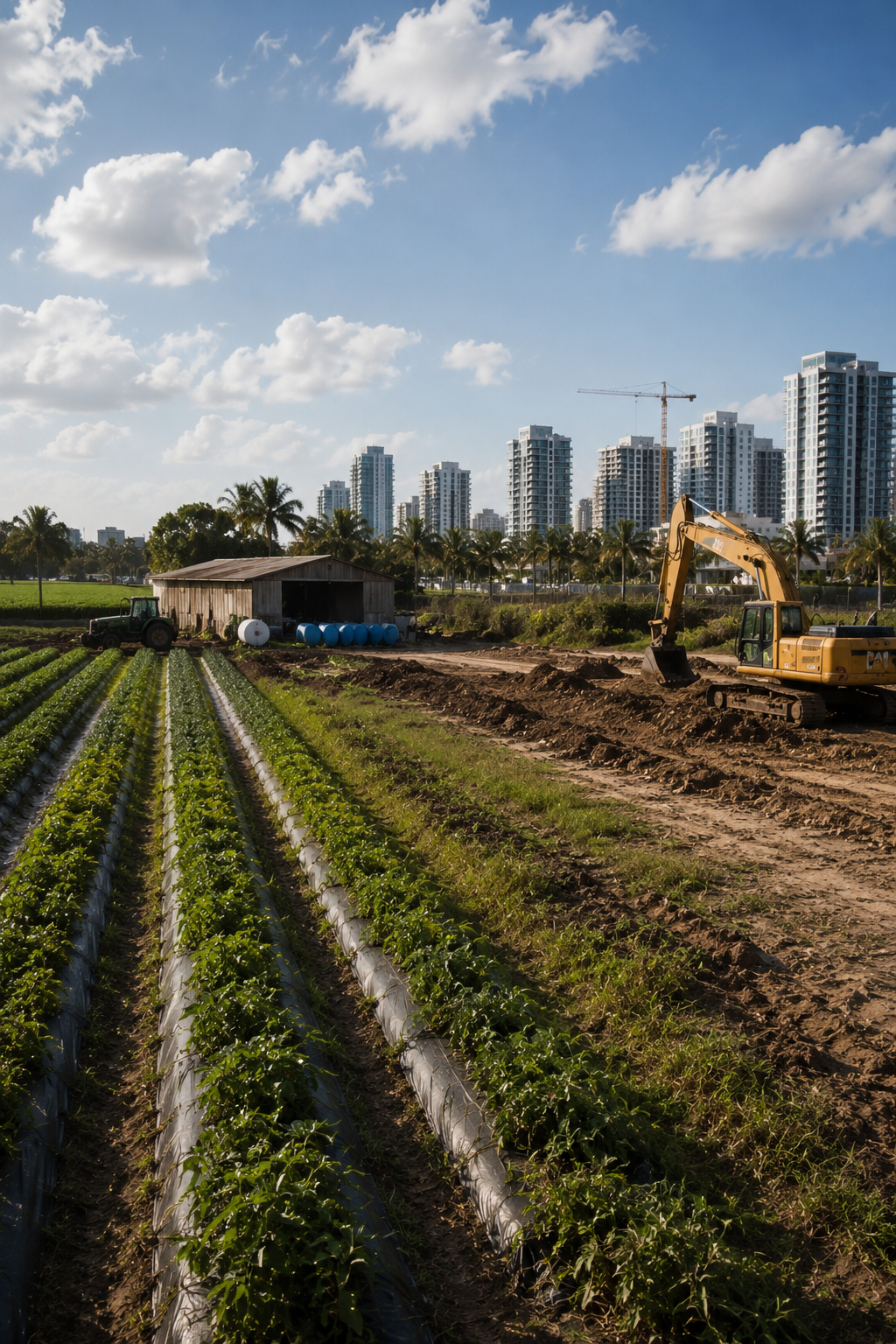
Chapter 24 can become highly relevant when a property with agricultural history is being redeveloped, converted, expanded, or repositioned for new commercial, residential, or mixed-use development.
Environmental issues tied to historical agricultural and farm land use, fill material, groundwater concerns, prior operations, or potential contamination may create additional review requirements before permits or approvals can move forward.
For developers, investors, and property owners, identifying these issues early through environmental due diligence can help reduce unexpected delays, support better planning decisions, and clarify whether additional environmental site assessment or investigation may be needed.
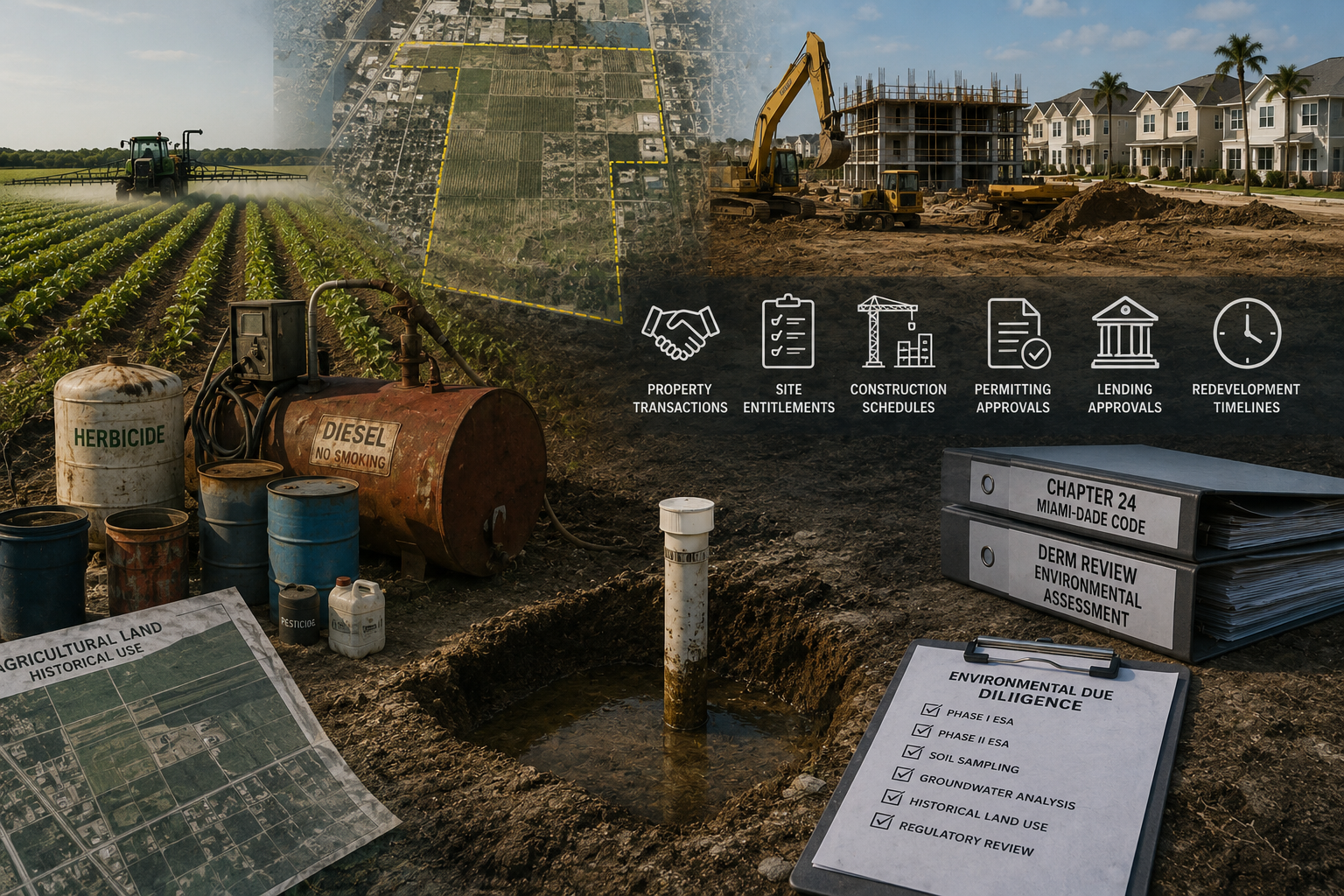
For redevelopment projects, agricultural land conversion, commercial property acquisitions, and site development, Chapter 24 considerations are part of the environmental due diligence, permitting, and regulatory review process.
How CRB Supports Chapter 24 Environmental Review & Redevelopment Due Diligence
CRB supports South Florida redevelopment projects involving Chapter 24 environmental review, DERM-related permitting considerations, agricultural land redevelopment, environmental due diligence, and commercial real estate environmental risk assessment. Our environmental consultants help developers, lenders, attorneys, investors, and property owners identify environmental concerns early in the redevelopment process to support better planning, permitting, and redevelopment decisions.
CRB Environmental Due Diligence & Redevelopment Support Includes:
Phase I Environmental Site Assessments (Phase I ESA)
Phase II Environmental Site Assessments
Historical agricultural land use review
Soil and groundwater assessment
Redevelopment environmental due diligence
Commercial real estate environmental risk assessment
DERM and regulatory coordination support
Environmental review for redevelopment projects
Environmental documentation for permitting and development planning
Environmental site assessment for agricultural land conversion
Environmental consulting for commercial redevelopment projects
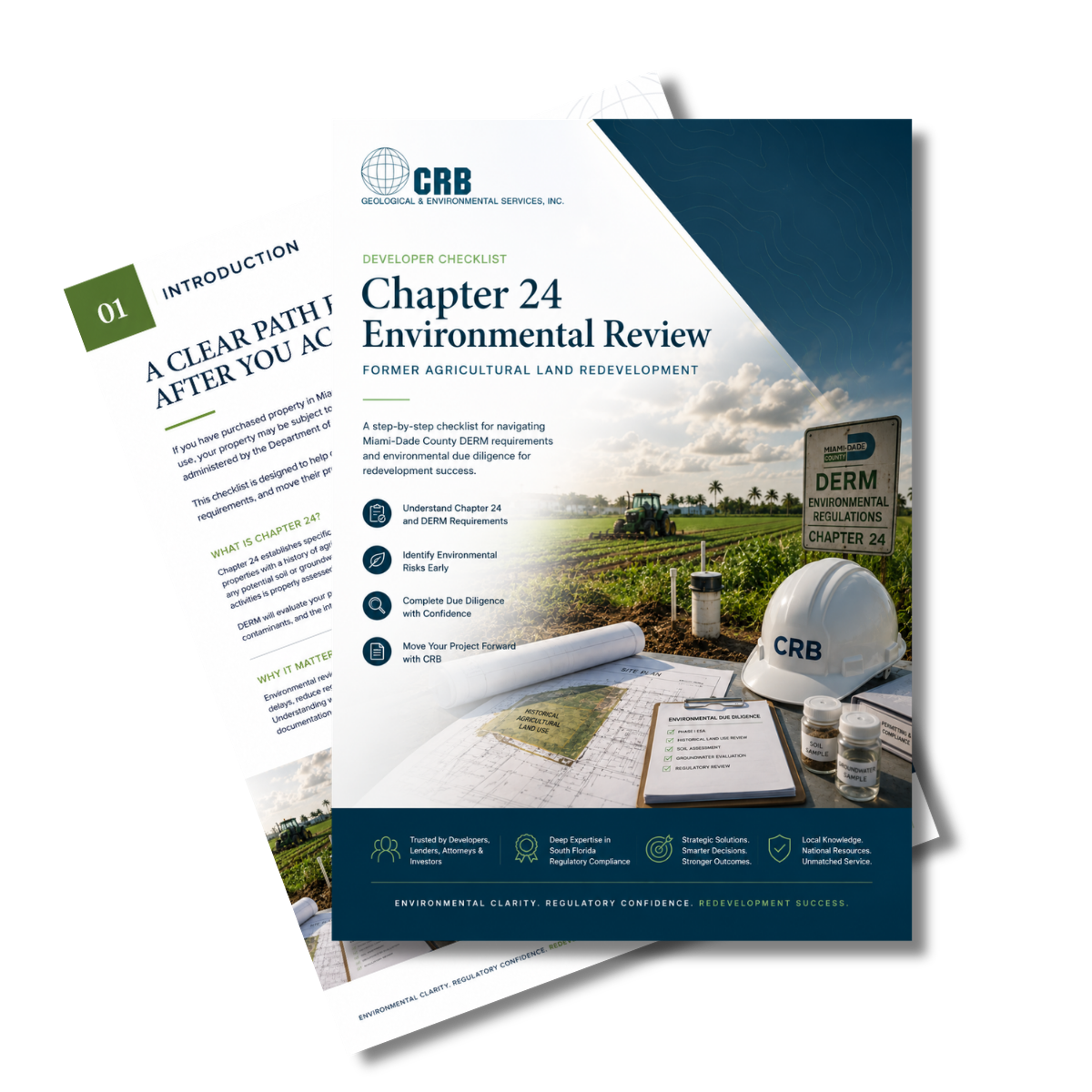
Related Environmental Services for South Florida Redevelopment
For projects involving Chapter 24 considerations, CRB may also support related environmental due diligence services, including:
Agricultural Land Redevelopment Environmental Assessments
Miami-Dade Chapter 24 Frequently Asked Questions
-
Chapter 24 environmental review refers to environmental requirements associated with Miami-Dade County’s Environmental Protection Ordinance. For redevelopment and site development projects, Chapter 24 may become relevant when environmental concerns need to be evaluated before permits, approvals, or construction activities move forward.
-
Chapter 24 matters because environmental concerns tied to historical land use, agricultural activity, groundwater conditions, fill material, or prior site operations may impact redevelopment planning, permitting, or regulatory review.
-
Agricultural land redevelopment may require environmental review when historical agricultural use, pesticide concerns, groundwater conditions, or other environmental risks are identified during due diligence or permitting review.
-
A Phase I Environmental Site Assessment is often an important first step in environmental due diligence. While a Phase I ESA is not the same as Chapter 24 review, it can help identify historical property uses and recognized environmental conditions that may lead to additional review, investigation, or regulatory coordination.
-
CRB helps developers, lenders, attorneys, property owners, and investors evaluate environmental concerns tied to redevelopment, agricultural land conversion, permitting, DERM review, Phase I ESA findings, Phase II investigation, soil and groundwater assessment, and environmental risk management.