
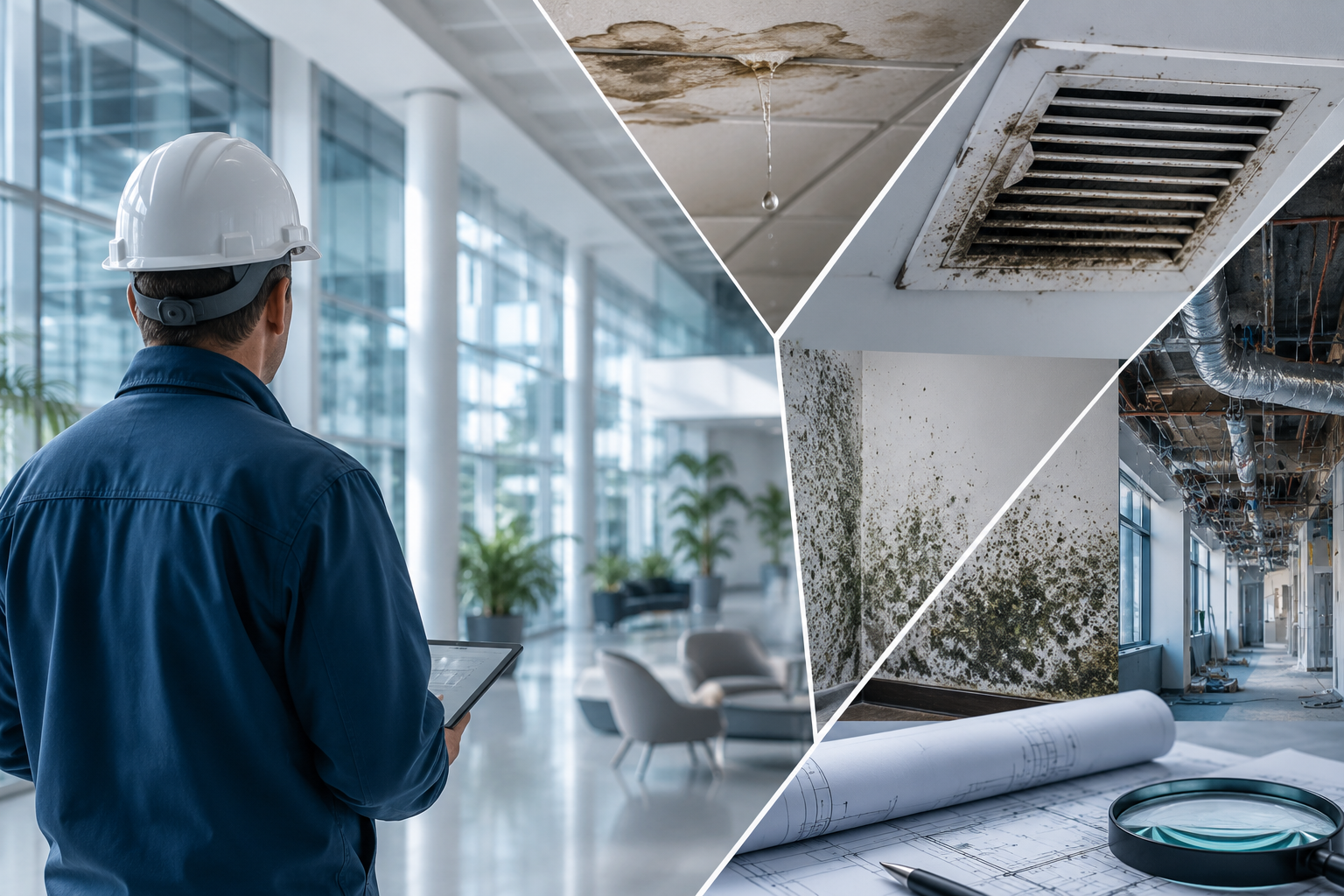
Commercial Indoor Air Quality Assessment & Testing
CRB provides commercial indoor air quality assessments and testing to investigate occupant complaints, odors, ventilation concerns and suspected airborne contaminants. We evaluate building conditions, HVAC and ventilation factors, potential contaminant sources and targeted testing data to identify likely causes and provide clear recommendations for next steps.
On This Page
- What Is Indoor Air Quality?
- When Is a Commercial Indoor Air Quality Assessment Needed?
- What Does a Commercial Indoor Air Quality Assessment Evaluate?
- Indoor Air Quality Testing & Sampling
- How CRB Investigates Indoor Air Quality Problems
- Commercial Properties & Facilities We Serve
- Indoor Air Quality Standards & Guidance
- Frequently Asked Questions About Indoor Air Quality
What Is Indoor Air Quality?
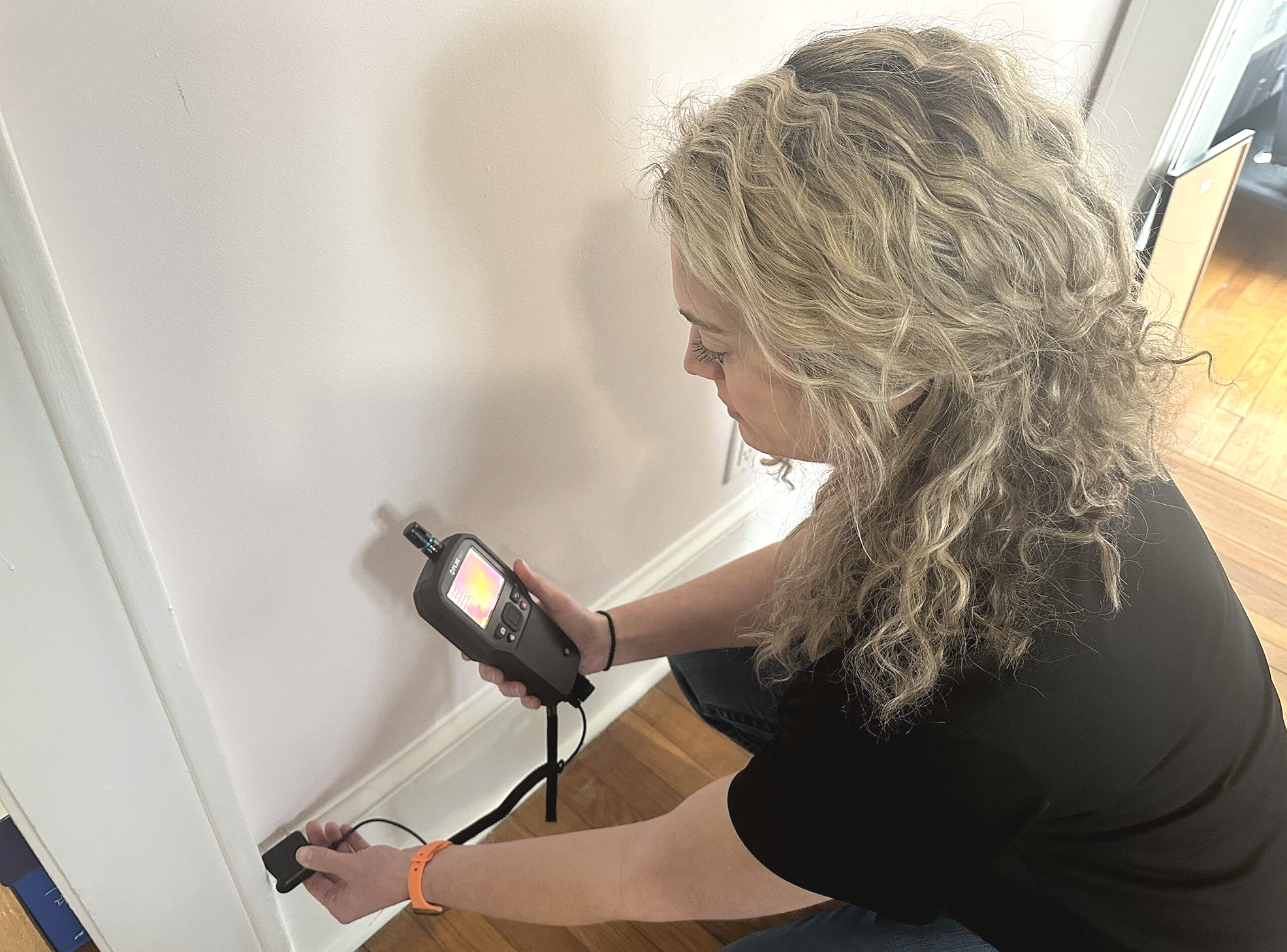
Indoor air quality (IAQ) refers to the conditions of the air within and around buildings, particularly as they relate to building occupants and the indoor environment. In commercial buildings, IAQ can be influenced by ventilation and HVAC systems, temperature and humidity, building materials, cleaning products, renovation activities, outdoor air sources, occupant activities and airborne contaminants such as volatile organic compounds (VOCs), particulate matter and carbon monoxide.
Indoor air quality problems are not always caused by a single contaminant or identified through a single air test. A commercial IAQ assessment considers the building as a whole, including potential pollutant sources, ventilation, HVAC operation and other building conditions, to understand what may be contributing to the concern.
When Is a Commercial Indoor Air Quality Assessment Needed?
A commercial indoor air quality assessment may be needed when occupants report air quality or comfort concerns, persistent odors develop, ventilation problems are suspected, or building conditions suggest a potential source of airborne contaminants.
Indoor air quality problems do not always have an obvious cause. Conditions within the HVAC system, inadequate ventilation, renovation activities, building materials, moisture, outdoor air sources and contaminants generated inside the building can all affect the indoor environment. Because there is no single test that identifies every IAQ problem, the investigation should be based on the building, the reported concern and the potential sources involved.
CRB evaluates the building conditions and potential sources behind the concern, then determines what measurements or testing are appropriate to help identify the cause and recommend the next steps.
Before Renovation or Demolition
Repeated complaints of stuffy air, unusual odors, irritation or discomfort may indicate a building-related condition that warrants investigation. An IAQ assessment can evaluate patterns in the reported concerns alongside ventilation, temperature, humidity, building conditions and potential contaminant sources.
Ventilation & HVAC Concerns
Inadequate outdoor air, poor air distribution, HVAC maintenance issues and contaminated air entering or circulating through a building can contribute to indoor air quality problems.
CRB evaluates HVAC and ventilation-related conditions as part of the broader IAQ investigation and may use measurements such as temperature, relative humidity, carbon dioxide and airflow information to help evaluate conditions within occupied spaces.
Persistent or Unexplained Odors
Persistent chemical, musty or other unusual odors can originate from building materials, cleaning products, furnishings, HVAC systems, nearby operations, outdoor sources or other conditions within the property.
CRB investigates potential odor sources and pathways to help determine where the condition may be originating and whether targeted air quality testing is appropriate.
Suspected Airborne Contaminants
Indoor air quality concerns may involve volatile organic compounds (VOCs), particulate matter, carbon monoxide, airborne dust, chemicals or other contaminants associated with building materials, equipment, operations, renovations or outdoor sources.
When testing will provide useful information, CRB develops a targeted approach based on the suspected contaminant and the conditions being investigated rather than applying the same testing package to every building.
After Renovation, Construction or Building Improvements
Renovations and construction activities can introduce dust, odors, VOCs and other airborne contaminants or alter ventilation and airflow within occupied spaces.
An indoor air quality assessment can help investigate concerns that develop during or after construction, tenant improvements, installation of new materials or furnishings, and other changes to the building.
Proactive Indoor Environmental Quality Evaluations
An IAQ assessment does not have to begin with an occupant complaint. Property owners and facility managers may also evaluate indoor environmental conditions as part of facility management, building investigations, property improvements or efforts to better understand conditions within occupied spaces.
CRB can develop an assessment scope based on the property, building use and objectives of the investigation.
What Does a Commercial Indoor Air Quality Assessment Evaluate?
A commercial indoor air quality assessment evaluates the building conditions, ventilation and HVAC systems, potential pollutant sources and environmental conditions that may be contributing to an indoor air quality concern. Depending on the building and reason for the investigation, the assessment may include measurements or targeted testing for volatile organic compounds (VOCs), particulate matter, carbon dioxide, carbon monoxide, temperature, relative humidity and other contaminants or indicators relevant to the investigation.
The specific scope should be based on the concern being investigated rather than applying the same testing package to every property. CRB evaluates the building as a whole to determine which conditions, measurements and testing methods are appropriate for identifying potential sources and understanding how they may be affecting occupied spaces.
-
Heating, ventilation and air conditioning systems can significantly affect how outdoor air is introduced, how air moves through a building and how indoor contaminants are diluted, filtered or distributed.
As part of an IAQ assessment, CRB may evaluate ventilation and HVAC-related conditions, including outdoor air delivery, air distribution, filtration, equipment condition and other factors relevant to the areas being investigated.
-
Volatile organic compounds can be emitted by building materials, furnishings, paints, coatings, adhesives, cleaning products, equipment and other indoor sources. Renovations, new materials or changes in building operations can also introduce potential VOC sources.
When VOCs are relevant to the concern being investigated, CRB can perform targeted VOC testing and evaluate the results in relation to building conditions, potential sources and the areas affected.
-
Indoor particulate matter can originate from outdoor air, construction or renovation activities, building operations, dust-generating processes and other sources.
Depending on the investigation, particulate monitoring may be used to evaluate airborne particle concentrations and help determine whether conditions within the building or surrounding environment may be contributing to the concern.
-
Carbon dioxide (CO2) measurements can provide useful information about occupancy and ventilation conditions within a building when interpreted in the appropriate context.
CRB may evaluate CO2 alongside occupancy, HVAC operation, outdoor air conditions, temperature and other building information to better understand ventilation performance in the areas being investigated.
-
Carbon monoxide and other combustion-related contaminants may be associated with fuel-burning equipment, vehicle exhaust, loading areas, parking structures, outdoor sources or other conditions affecting the building.
When combustion-related concerns are relevant to an IAQ investigation, CRB can evaluate potential sources and perform appropriate measurements to help determine whether they may be affecting occupied spaces.
-
Temperature and relative humidity affect occupant comfort and can provide useful information about HVAC performance and conditions within a building. Moisture intrusion, condensation and elevated humidity can also indicate building conditions requiring further investigation.
CRB evaluates these conditions as part of the overall IAQ investigation when they are relevant to the reported concern.
-
Persistent odors may originate from building materials, furnishings, cleaning products, HVAC systems, nearby operations, outdoor air, construction activities or other sources within or around the property.
CRB evaluates potential sources and pathways as part of the investigation and determines whether targeted measurements or sampling may help identify the cause.
Indoor air quality testing can provide valuable information about conditions within a commercial building, but there is no single test that can identify every IAQ problem. The appropriate testing strategy depends on the concern being investigated, potential contaminant sources, building conditions and information gathered during the site assessment.
CRB uses targeted measurements and sampling when they can help answer a specific question about the indoor environment. Depending on the investigation, this may include real-time measurements, direct-reading instruments, air sampling or laboratory analysis for selected contaminants.
Indoor Air Quality Testing & Sampling
Targeted Testing Based on the Building
CRB does not apply the same testing package to every property. Testing parameters are selected based on the reported concern, areas affected, building use, HVAC and ventilation conditions, potential indoor and outdoor sources, recent construction or operational changes, and observations made during the investigation.
For example, a persistent chemical odor may require a different testing strategy than a ventilation complaint, construction-related dust concern or suspected combustion source.
Field Measurements & Air Sampling
Depending on the investigation, CRB may collect field measurements for parameters such as temperature, relative humidity, carbon dioxide, carbon monoxide and particulate matter. Targeted air sampling and laboratory analysis may also be appropriate when specific contaminants, including volatile organic compounds (VOCs), need to be evaluated.
The methods selected depend on the contaminant or condition being investigated and the purpose of the assessment.
Interpreting Indoor Air Quality Test Results
Indoor air quality test results should be interpreted in the context of the building rather than treated as standalone pass-or-fail numbers. CRB evaluates testing data alongside site observations, HVAC and ventilation conditions, potential contaminant sources, occupancy patterns and other relevant information gathered during the investigation.
This approach helps determine what the results actually mean for the building and whether additional investigation or corrective action is warranted.
Does Every IAQ Assessment Require Air Testing?
No. Not every indoor air quality assessment requires air sampling or laboratory testing. In some cases, the source of an IAQ concern may be identified through the building investigation, HVAC evaluation, direct measurements or other observations.
When additional testing is warranted, CRB develops a targeted sampling strategy designed to provide information relevant to the specific concern rather than collecting data without a defined investigative purpose.
How CRB Investigates Indoor Air Quality Problems
1. Understand the IAQ Concern
The investigation begins by defining what is happening in the building and why an indoor air quality assessment is being requested.
CRB reviews the nature of the concern, where and when it occurs, which areas are affected, how the space is used, and whether there have been recent changes such as renovations, new materials, HVAC modifications, water intrusion or changes in building operations.
Understanding the history and pattern of the concern helps determine where the investigation should begin and what potential sources should be considered.
2. Review Building & HVAC Conditions
CRB evaluates the areas of concern along with building and HVAC conditions that may be influencing the indoor environment.
Depending on the project, the assessment may consider ventilation and air distribution, HVAC operation and filtration, temperature and relative humidity, potential indoor and outdoor contaminant sources, building materials, recent construction activities and other conditions relevant to the investigation.
The objective is to identify potential sources and pathways before determining whether additional measurements or sampling are necessary.
3. Conduct Targeted Measurements & Sampling
When testing can provide useful information, CRB selects measurements and sampling methods based on the conditions being investigated.
Depending on the concern, this may include field measurements or targeted testing for parameters such as carbon dioxide, carbon monoxide, particulate matter, volatile organic compounds (VOCs), temperature, relative humidity or other contaminants relevant to the investigation.
Testing is selected to answer specific questions about the building rather than applying the same testing package to every property.
Indoor air quality problems in commercial buildings are not always traced to a single contaminant or source. CRB uses a building-focused investigation process to understand the concern, evaluate conditions that may be contributing to it, collect targeted data when appropriate, and determine practical next steps.
The scope of each assessment is tailored to the property and the reason for the investigation. An office with recurring occupant complaints may require a different approach than a retail property with persistent odors or a facility experiencing ventilation concerns after renovation.
4. Evaluate the Findings in Building Context
CRB evaluates testing data together with site observations, building conditions, HVAC and ventilation information, potential contaminant sources and the history of the reported concern.
This is an important part of an IAQ investigation because an individual measurement or laboratory result does not always explain why a problem is occurring. Looking at the findings in the context of the building helps identify relationships between the reported concern and the conditions observed during the assessment.
5. Identify Likely Sources & Recommend Next Steps
Once the investigation is complete, CRB documents the findings and identifies conditions that may be contributing to the indoor air quality concern.
Recommendations are based on the conditions identified and may include HVAC or ventilation adjustments, source removal or control, operational or maintenance changes, additional investigation, targeted corrective action, or evaluation by another appropriate building professional when the issue falls outside the scope of the IAQ assessment.
The goal is to give property owners, facility managers and project teams a clear understanding of the findings and a practical path forward.
6. Follow-Up Evaluation, When Needed
Some indoor air quality concerns can be addressed after the initial investigation, while others may warrant follow-up after corrective measures have been implemented.
When appropriate, CRB can perform follow-up measurements or evaluation to document conditions after recommended changes and determine whether additional investigation is warranted.
Commercial Properties & Facilities We Serve
Veterinary & Animal Care Facilities
Veterinary hospitals, animal clinics, pet care facilities and grooming environments can present unique indoor air quality challenges related to animal occupancy, odors, cleaning and disinfecting products, ventilation, humidity and high-use areas. CRB provides IAQ assessments and targeted testing to investigate building conditions and potential sources affecting these specialized environments.
Explore Veterinary & Animal Facility IAQ Services →
Healthcare & Medical Facilities
Healthcare and medical facilities can present IAQ concerns related to ventilation, occupancy, cleaning and disinfecting products, renovations, odors and other building conditions. CRB develops targeted IAQ investigations based on the facility and specific concern being evaluated.
Retail & Multi-Site Facilities
CRB supports individual retail properties and multi-site portfolios with IAQ investigations involving occupant or customer complaints, odors, HVAC and ventilation concerns, construction activities and other conditions affecting occupied spaces.
Schools & Institutional Facilities
CRB provides IAQ assessments for schools and institutional facilities where ventilation, occupancy, building conditions, renovations, odors or reported air quality concerns warrant further investigation.
Indoor air quality concerns can vary significantly depending on how a building is occupied, operated and ventilated. CRB provides commercial IAQ assessments and testing for a range of property and facility types, with each investigation tailored to the building conditions, operations and concerns being evaluated.
Office & Commercial Buildings
CRB investigates IAQ concerns in offices and commercial buildings involving occupant complaints, odors, ventilation and HVAC conditions, temperature and humidity, renovations, building materials and suspected airborne contaminants.
Hospitality & Multifamily Properties
Hotels, multifamily communities and other residential hospitality properties may experience IAQ concerns affecting individual rooms, units, common areas or larger portions of a building. CRB investigates potential sources, HVAC and ventilation conditions and other building factors relevant to the concern.
Industrial & Manufacturing Facilities
Industrial and manufacturing environments may involve IAQ concerns associated with facility operations, equipment, materials, ventilation, particulates, odors or chemical sources. CRB develops the assessment scope around the specific building conditions and potential contaminants involved.
Construction & Renovation Projects
Construction and renovation activities can introduce dust, VOCs, odors and other airborne contaminants while also affecting ventilation and airflow within occupied buildings. CRB can investigate IAQ concerns that develop during or following construction, renovation and tenant improvement projects.
Indoor Air Quality Standards & Guidance
There is no single federal standard that establishes acceptable indoor air quality for every commercial building or indoor contaminant. The regulations, standards and technical guidance relevant to an IAQ investigation depend on the building, workplace conditions, contaminants being evaluated and purpose of the assessment.
OSHA does not have a specific comprehensive indoor air quality standard, although OSHA requirements may apply to specific workplace air contaminants, ventilation systems and occupational exposures. ANSI/ASHRAE Standard 62.1, Ventilation and Acceptable Indoor Air Quality, establishes minimum ventilation and other requirements for applicable nonresidential buildings and is an important industry reference for ventilation-related IAQ conditions. EPA and NIOSH also provide guidance for investigating indoor air quality concerns in commercial and workplace environments, emphasizing evaluation of pollutant sources, HVAC and ventilation conditions, building conditions and other contributing factors rather than reliance on a single air test.
CRB evaluates indoor air quality findings using the regulations, standards, technical guidance and evaluation criteria appropriate to the specific investigation rather than applying a universal pass-or-fail threshold to every building.
-
A commercial indoor air quality assessment evaluates building conditions, HVAC and ventilation systems, potential pollutant sources and environmental conditions that may be contributing to an IAQ concern. Depending on the investigation, CRB may also perform targeted measurements or testing for VOCs, particulate matter, carbon dioxide, carbon monoxide, temperature, relative humidity or other parameters relevant to the building.
-
Indoor air quality testing can evaluate contaminants and environmental parameters such as volatile organic compounds (VOCs), particulate matter, carbon monoxide, carbon dioxide, temperature and relative humidity. The appropriate tests depend on the building and the concern being investigated. CRB selects testing based on potential sources, site observations, HVAC and ventilation conditions, building use and the objectives of the assessment.
-
Persistent or unusual odors, stuffy spaces, recurring occupant complaints, temperature or humidity problems and concerns concentrated in particular areas can indicate a potential indoor air quality problem. Recent renovations, HVAC changes, construction activities or changes in building use may also contribute. An IAQ assessment can help determine whether building conditions, ventilation or potential contaminant sources warrant further investigation or testing.
-
No. OSHA does not have a specific comprehensive indoor air quality standard for general industry or construction. However, OSHA standards may apply to specific air contaminants, ventilation systems or other workplace hazards, and employers remain subject to applicable workplace safety requirements. The regulatory significance of an IAQ condition therefore depends on the contaminant, workplace and circumstances involved.
-
No. There is no single test that can identify every indoor air quality problem. An IAQ investigation may evaluate temperature, humidity, airflow, HVAC and ventilation systems, potential pollutant sources and specific airborne contaminants. CRB selects measurements and testing based on the building and reported concern rather than applying the same testing package to every property.
Frequently Asked Questions About Indoor Air Quality
-
The timeline for a commercial indoor air quality assessment depends on the size and complexity of the property, areas being investigated, nature of the concern and whether laboratory analysis is required. A focused investigation may require less time than a complex or multi-area assessment. CRB establishes the scope and anticipated schedule based on the specific property and project requirements.
-
Commercial indoor air quality problems can result from inadequate ventilation, indoor or outdoor pollutant sources, HVAC operation or maintenance issues, building materials, cleaning products, construction activities, combustion sources, moisture conditions and changes in building use. More than one factor may contribute to the same IAQ concern, which is why identifying potential sources and building conditions is an important part of the investigation.
-
Yes. HVAC and ventilation systems can contribute to indoor air quality problems when outdoor air supply, filtration, air distribution, equipment operation or maintenance are inadequate for building conditions. HVAC systems can also influence how contaminants enter, move through or are removed from occupied spaces, making HVAC and ventilation conditions an important part of many commercial IAQ investigations.
-
Elevated indoor carbon dioxide (CO2) can provide information about ventilation relative to occupancy, but CO2 is not a standalone measure of overall indoor air quality. CO2 measurements should be interpreted alongside occupancy, outdoor concentrations, HVAC operation and other building conditions. A CO2 reading alone does not determine whether other indoor contaminants are present or whether overall IAQ is acceptable.
-
VOC testing may be appropriate when building conditions indicate a potential source of volatile organic compounds, such as paints, coatings, adhesives, furnishings, cleaning products, building materials or certain commercial operations. It may also be useful when chemical odors or IAQ concerns develop following renovation or installation of new materials. CRB determines whether targeted VOC testing will provide useful information based on the specific investigation.
-
Yes. CRB provides commercial indoor air quality assessment, testing and consulting services for projects across the United States. Assessment scopes are developed based on the property, reported concern, building conditions and project objectives, allowing CRB to support individual facilities as well as commercial and institutional projects in multiple markets.