
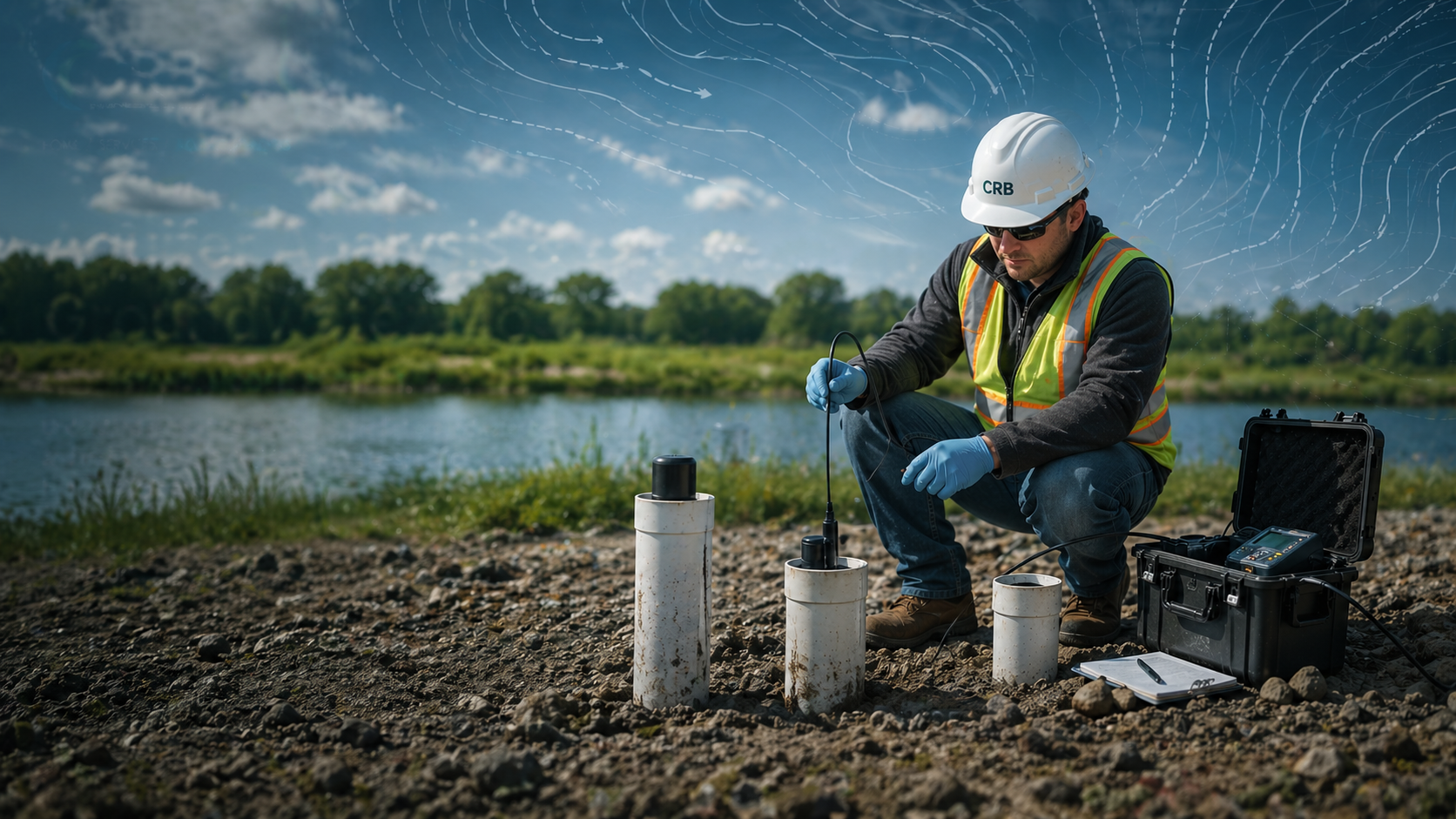
Aquifer Analysis & Groundwater Modeling Services
CRB provides aquifer analysis, hydrogeologic investigations and groundwater modeling to evaluate groundwater flow, aquifer properties, drawdown and contaminant migration. Our groundwater consulting services support environmental investigations, remediation design, construction dewatering, water resource evaluation and regulatory decision-making.
On This Page
- What Are Aquifer Analysis & Groundwater Modeling?
- When Do You Need an Aquifer Analysis or Groundwater Model?
- Aquifer Analysis & Groundwater Modeling Services
- Aquifer Testing & Hydrogeologic Characterization
- How CRB Conducts Aquifer Analysis & Groundwater Modeling
- Applications for Aquifer Analysis & Groundwater Modeling
- Frequently Asked Questions About Aquifer Analysis & Groundwater Modeling
What Are Aquifer Analysis & Groundwater Modeling?
Aquifer analysis is the evaluation of groundwater and the geologic formations through which it moves to understand characteristics such as hydraulic conductivity, transmissivity, storativity, groundwater gradients and aquifer response to pumping. Aquifer testing and site-specific hydrogeologic data can be used to characterize these properties and support groundwater-related decisions. USGS identifies hydraulic conductivity, transmissivity and storativity among the hydraulic characteristics derived from aquifer-test analysis.
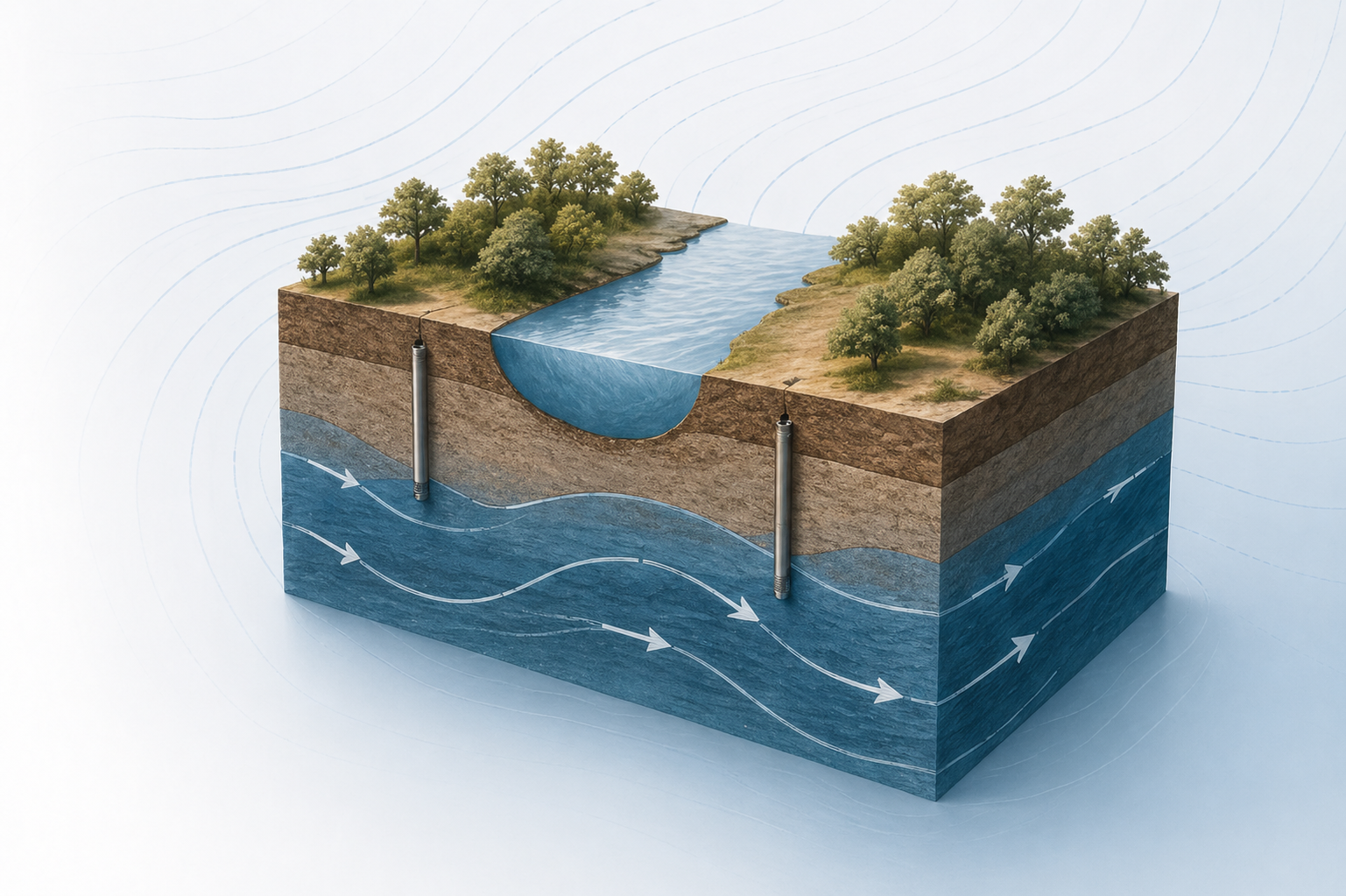
Groundwater modeling uses mathematical representations of a groundwater system to evaluate how groundwater may move or respond under existing or proposed conditions. Depending on the project, models can be used to evaluate groundwater flow, drawdown, groundwater/surface-water interaction and dissolved contaminant transport.
Together, aquifer analysis and groundwater modeling provide a technical basis for evaluating groundwater conditions and predicting how a groundwater system may respond to pumping, development, dewatering, remediation or other changes.
When Do You Need an Aquifer Analysis or Groundwater Model?
Aquifer analysis and groundwater modeling may be needed when groundwater conditions could affect environmental investigations, remediation, construction, water supply, permitting or long-term site management. The appropriate level of analysis depends on the project objectives, site hydrogeology and decisions the study needs to support.
Groundwater Contamination & Plume Migration
Aquifer analysis can help determine groundwater flow direction, hydraulic gradients and aquifer properties that influence contaminant migration. When contamination has been identified, hydrogeologic data and groundwater modeling can support plume delineation, evaluate potential migration pathways and provide a technical basis for additional investigation, monitoring or corrective action.
Groundwater Remediation & Corrective Action
Groundwater conditions directly influence the design and performance of many remediation systems. Aquifer testing and groundwater modeling can be used to evaluate groundwater movement, predict system response, assess extraction or injection strategies and support the development or optimization of groundwater corrective actions.
Construction Dewatering & Excavation
Projects involving below-grade construction or excavation may require an understanding of groundwater levels, aquifer response and potential drawdown. Aquifer testing and groundwater analysis can support dewatering system design, estimate pumping requirements and evaluate how proposed dewatering may affect groundwater conditions surrounding the project.
Groundwater Supply & Withdrawal
Aquifer testing can evaluate how an aquifer responds to pumping and provide data used to assess groundwater availability and potential drawdown. Depending on the project, hydrogeologic analysis or groundwater modeling may also be used to evaluate proposed withdrawals and potential effects on the surrounding groundwater system.
Regulatory & Permitting Requirements
Regulatory agencies may require hydrogeologic data, aquifer testing or groundwater modeling to evaluate groundwater impacts associated with a proposed project, remediation strategy, withdrawal or other regulated activity. CRB can develop the technical analysis and documentation appropriate to the applicable project and regulatory requirements.
Development & Groundwater Impact Evaluation
Groundwater conditions can affect the feasibility and design of development projects, particularly where excavation, dewatering, groundwater withdrawal or sensitive nearby resources are involved. Hydrogeologic analysis can help project teams understand subsurface water conditions early enough to incorporate them into planning and design decisions.
Aquifer Testing & Pumping Test Analysis
Aquifer testing evaluates how groundwater levels and an aquifer respond to controlled pumping and provides site-specific data used to characterize aquifer properties. Pumping and recovery test data can be analyzed to estimate hydraulic properties such as transmissivity, storativity and hydraulic conductivity and to evaluate groundwater drawdown and aquifer response.
CRB performs aquifer testing and pumping test analysis to support hydrogeologic characterization, groundwater modeling, dewatering evaluations, groundwater withdrawal studies and other projects requiring a quantitative understanding of aquifer performance.
Aquifer Characterization & Hydrogeologic Investigations
Hydrogeologic investigations characterize the geologic and groundwater conditions that control how water occurs and moves through an aquifer system. Depending on the project, this may include evaluating site geology, groundwater elevations, hydraulic gradients, groundwater flow direction, aquifer properties, well information and aquifer test data.
CRB integrates available and site-specific hydrogeologic data to develop a conceptual understanding of the groundwater system. This characterization provides the technical foundation for aquifer analysis, groundwater flow modeling, contaminant migration evaluation, dewatering analysis and groundwater-related environmental or engineering decisions.
Groundwater Flow Modeling
Groundwater flow modeling uses a mathematical representation of an aquifer system to evaluate how groundwater moves and how the system may respond to existing or proposed conditions. Depending on the project objectives and available data, a groundwater model may evaluate groundwater elevations, hydraulic gradients, flow direction, pumping scenarios, drawdown, recharge and other stresses or boundary conditions affecting groundwater flow.
CRB develops groundwater flow analyses and models appropriate to the hydrogeologic setting and project objectives to support groundwater management, dewatering, remediation, development and regulatory decision-making.
Aquifer analysis and groundwater modeling provide the hydrogeologic data and predictive tools needed to understand groundwater conditions and evaluate how an aquifer may respond to pumping, contamination, remediation, construction dewatering and other changes. CRB combines aquifer testing, hydrogeologic investigation, groundwater data analysis and analytical or numerical modeling to characterize groundwater systems and support environmental, engineering and regulatory decisions.
Aquifer Analysis & Groundwater Modeling Services
Contaminant Fate & Transport Modeling
Contaminant fate and transport modeling evaluates how dissolved contaminants may move and behave within a groundwater system over time. The analysis considers groundwater flow and, as appropriate to the model, processes that can influence contaminant migration and concentration.
CRB uses groundwater flow and contaminant transport analysis to support contaminant plume evaluation, groundwater remediation planning, monitoring strategies and regulatory decision-making. Model complexity and predictive use are based on the site conceptual model, available hydrogeologic and contaminant data, and the specific questions the analysis is intended to address.
Groundwater Drawdown & Construction Dewatering Analysis
Groundwater drawdown analysis evaluates how pumping or construction dewatering may affect groundwater levels within and surrounding a project area. Aquifer properties, groundwater elevations, pumping conditions and site hydrogeology can be used to estimate drawdown and evaluate the anticipated response of the groundwater system.
CRB provides groundwater and aquifer analysis for construction dewatering, excavation and other projects requiring groundwater control, helping project teams evaluate anticipated pumping conditions, dewatering requirements and potential effects on surrounding groundwater conditions.
Groundwater Recharge & Hydrogeologic Flow Analysis
Groundwater recharge and flow analysis evaluates how water enters and moves through an aquifer system and the hydrogeologic conditions that influence groundwater movement. Recharge, groundwater elevations, hydraulic gradients, aquifer properties and flow pathways may be evaluated to develop a more complete understanding of the groundwater system.
CRB performs groundwater recharge and hydrogeologic flow analysis to support aquifer characterization, groundwater modeling, water-resource evaluations, environmental investigations and assessments of how pumping, development or other site conditions may affect groundwater movement.
Aquifer testing provides site-specific data used to characterize groundwater conditions and determine how an aquifer responds to changes in hydraulic stress. Depending on the project objectives, aquifer testing can be used to evaluate hydraulic conductivity, transmissivity, storativity, groundwater elevations, hydraulic gradients and aquifer response to pumping.
CRB performs aquifer testing and hydrogeologic characterization for environmental investigations, groundwater modeling, construction dewatering, groundwater withdrawal evaluations, remediation planning and other projects requiring a quantitative understanding of groundwater conditions. The appropriate testing method is selected based on the hydrogeologic setting, well configuration, project objectives and aquifer properties being evaluated.
Aquifer Testing & Hydrogeologic Characterization
Aquifer Pumping Tests
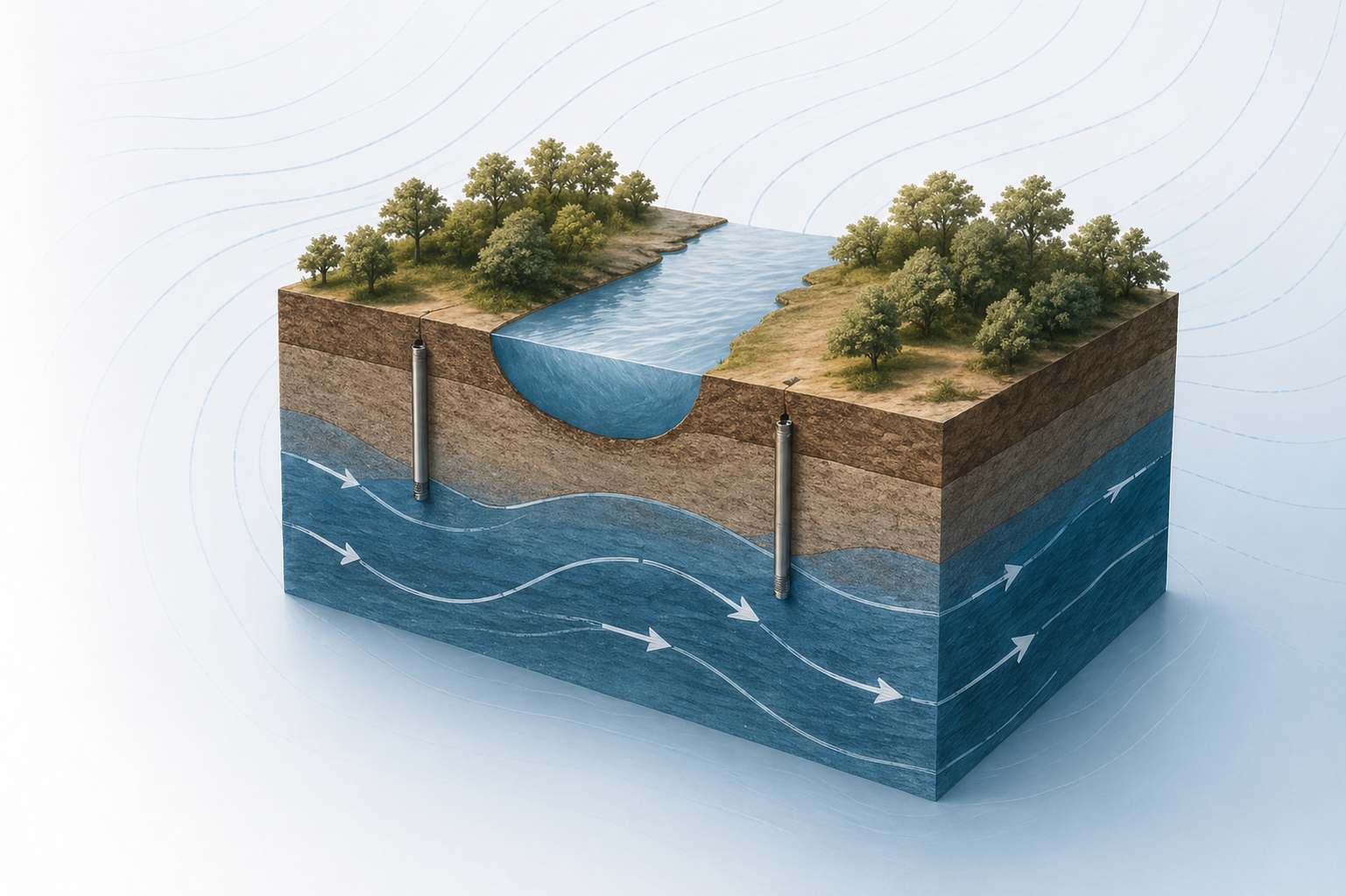
Aquifer pumping tests evaluate how groundwater levels respond to controlled pumping over a defined period. Water-level changes are monitored in the pumping well and, when appropriate, surrounding observation wells to evaluate the hydraulic response of the aquifer.
Recovery Tests
Recovery tests evaluate how groundwater levels recover after pumping is reduced or stopped. The rate and pattern of groundwater-level recovery provide additional information about aquifer response and can be analyzed independently or together with pumping test data.
Groundwater-Level Monitoring
Groundwater-level monitoring measures groundwater elevations over time to establish hydraulic gradients, evaluate groundwater flow direction and identify changes in groundwater conditions. Depending on the project, measurements may be collected during a single investigation or over an extended monitoring period to evaluate temporal changes.
No single aquifer testing method is appropriate for every groundwater investigation. CRB selects and interprets aquifer testing methods based on the site hydrogeology, available wells and data, project objectives and the decisions the investigation is intended to support. Results are evaluated within the broader hydrogeologic setting so that aquifer properties and groundwater conditions are interpreted in context rather than as isolated measurements.

How CRB Conducts Aquifer Analysis & Groundwater Modeling
-
CRB begins by identifying the decision the investigation needs to support, such as evaluating aquifer properties, groundwater withdrawal, dewatering, contaminant migration, remediation performance or potential groundwater impacts.
-
Available geological, groundwater, well, site and historical data are reviewed to establish an initial understanding of aquifer units, groundwater elevations, flow conditions, potential boundaries and other factors controlling the groundwater system.
-
When additional data are needed, CRB develops an appropriate field investigation that may include aquifer pumping tests, groundwater-level monitoring, well installation or other hydrogeologic data collection based on project objectives.
-
Field and historical data are evaluated to characterize groundwater flow, hydraulic gradients and relevant aquifer properties. These findings establish the technical basis for groundwater impact analysis and, when appropriate, groundwater model development.
-
When modeling is warranted, CRB develops an analytical or numerical representation appropriate to the groundwater system and project objectives. Model scenarios can then be used to evaluate groundwater flow, drawdown, contaminant transport or other conditions relevant to the project.
-
CRB documents the investigation methods, assumptions, data, analysis and findings and provides recommendations based on the project objectives. Results may support engineering decisions, remediation planning, regulatory review, permitting or additional groundwater investigation.
Aquifer characterization and groundwater modeling can help define groundwater flow conditions, evaluate contaminant plume migration and support groundwater remediation and corrective action planning. CRB uses site-specific hydrogeologic data to help determine how groundwater conditions may influence contaminant movement, monitoring strategies and remediation decisions.
Applications for Aquifer Analysis & Groundwater Modeling
Groundwater conditions can influence site development, below-grade construction, dewatering and other project decisions. CRB provides hydrogeologic investigations, aquifer analysis and groundwater modeling to help developers, engineers and project teams understand groundwater conditions and evaluate potential groundwater-related constraints before or during development.
Aquifer analysis and groundwater modeling can support projects where groundwater conditions affect environmental investigation, remediation, construction, development, water supply or regulatory decisions. CRB applies hydrogeologic investigation, aquifer testing and groundwater modeling based on the site conditions and the specific question the analysis needs to answer.
Below-grade construction and excavation may require dewatering when groundwater could interfere with construction activities. Aquifer testing, groundwater drawdown analysis and groundwater modeling can help evaluate aquifer response to pumping, anticipated drawdown and groundwater conditions relevant to dewatering system planning and design.
Environmental and water-resource projects may require hydrogeologic investigations, aquifer testing, groundwater analysis or modeling to support regulatory review or permitting. CRB develops site-specific groundwater evaluations and technical documentation based on the project objectives, applicable requirements and information needed by the reviewing agency.
Aquifer characterization and groundwater modeling can be used to evaluate existing groundwater conditions and how an aquifer may respond to pumping or other changes over time. CRB provides hydrogeologic analysis to support groundwater-resource evaluations, pumping scenarios and other decisions requiring a better understanding of aquifer behavior.
Aquifer testing and hydrogeologic analysis can be used to evaluate aquifer response to proposed groundwater pumping or withdrawal. Depending on the project, CRB can evaluate aquifer properties, drawdown and groundwater conditions to support proposed wells, water-supply evaluations and groundwater-resource planning.
Environmental Investigation & Groundwater Remediation
Construction Dewatering & Groundwater Control
Water Supply & Groundwater Withdrawal
Commercial & Industrial Development
Regulatory & Permitting Support
Groundwater Resource Management
Frequently Asked Questions About Aquifer Analysis & Groundwater Modeling
-
Aquifer analysis evaluates the hydraulic characteristics of an aquifer and how groundwater moves through and responds within the groundwater system. Depending on the project, the analysis may evaluate groundwater elevations, hydraulic gradients, hydraulic conductivity, transmissivity, storativity and response to pumping. Aquifer analysis can support groundwater supply evaluations, construction dewatering, environmental investigations, remediation and groundwater modeling.
-
An aquifer pumping test evaluates how an aquifer responds when groundwater is pumped from a well at a controlled rate. Groundwater levels are monitored during pumping and, when appropriate, during recovery after pumping stops. The resulting data can be analyzed to estimate aquifer properties such as transmissivity and storativity and to evaluate groundwater drawdown and aquifer response to pumping.
Pumping tests generally evaluate a larger volume of the aquifer than single-well slug tests.
-
An aquifer pumping test can provide information about aquifer hydraulic properties and groundwater response to pumping. Depending on the test design and hydrogeologic conditions, pumping-test data may be used to estimate transmissivity, storativity and hydraulic conductivity, evaluate drawdown and assess how pumping influences groundwater levels.
These results can support groundwater withdrawal evaluations, dewatering analysis, groundwater modeling and other projects where aquifer response to pumping needs to be understood.
-
A pumping test removes groundwater from a well at a controlled rate and measures the aquifer's response over time, often using the pumping well and nearby observation wells. A slug test creates a rapid change in the water level of a single well and measures how quickly the water level returns toward equilibrium.
Slug tests generally characterize hydraulic conditions near the tested well, while pumping tests can evaluate a substantially larger volume of the aquifer.
-
Hydraulic conductivity describes how readily water can move through a geologic material under a hydraulic gradient. Materials with higher hydraulic conductivity generally transmit groundwater more readily than materials with lower hydraulic conductivity.
Hydraulic conductivity is an important parameter in aquifer characterization and can be estimated using methods such as aquifer pumping tests and slug tests. It is also commonly used in groundwater flow analysis and groundwater modeling.
-
Transmissivity describes the ability of the saturated thickness of an aquifer to transmit groundwater and is related to hydraulic conductivity and aquifer thickness.
Storativity describes the volume of water an aquifer releases from or takes into storage per unit area for a unit change in hydraulic head.
Both are important aquifer properties that can be evaluated through aquifer testing and used to understand groundwater response to pumping.
-
Groundwater modeling uses a mathematical representation of a groundwater system to simulate groundwater flow and, depending on the model, contaminant transport or other groundwater processes. Models incorporate hydrogeologic information such as aquifer properties, groundwater elevations, recharge, pumping and boundary conditions to evaluate how the groundwater system may behave under defined conditions or scenarios.
Groundwater models can support environmental investigations, remediation, dewatering, groundwater withdrawal and water-resource decisions.
-
Groundwater modeling is used to evaluate groundwater flow and how an aquifer may respond to pumping, dewatering, recharge, remediation or other changes. Depending on the project, models can be used to evaluate groundwater elevations, flow direction, hydraulic gradients, drawdown, contaminant migration and alternative pumping or remediation scenarios.
The appropriate model and level of complexity depend on the hydrogeologic system, available data and the question the model is intended to answer.
-
Groundwater models are developed using a conceptual understanding of the hydrogeologic system and available site-specific data. Depending on the project, inputs may include site geology and stratigraphy, groundwater elevations, aquifer thickness, hydraulic conductivity, transmissivity, storativity, recharge, pumping rates, well information and hydrogeologic boundaries.
Additional field investigation or aquifer testing may be needed when existing information is not sufficient to support the model's intended use.
-
Groundwater models are simplified representations of complex natural systems, so they should not be interpreted as exact predictions of future groundwater conditions. Their reliability depends on factors such as the quality and quantity of available data, the conceptual hydrogeologic model, assumptions, boundary conditions, parameter values, calibration and the purpose for which the model was developed.
A properly developed model can provide a technically useful tool for comparing scenarios and supporting groundwater-related decisions.
-
Groundwater flow and contaminant transport modeling can be used to evaluate how dissolved contaminants may migrate through a groundwater system under defined conditions. Depending on the model, the analysis may consider groundwater flow as well as processes affecting contaminant movement and concentration.
Model results can support contaminant plume evaluation, monitoring strategies, groundwater remediation planning and comparison of potential corrective-action scenarios. Predictions remain dependent on available site data, model assumptions and uncertainty.
-
Yes. Groundwater analysis and modeling can be used to evaluate how proposed dewatering may affect groundwater levels around an excavation or construction site. Depending on project conditions, the analysis may evaluate anticipated drawdown, aquifer response to pumping, groundwater flow and potential changes to surrounding groundwater conditions.
CRB provides aquifer testing, groundwater drawdown analysis and groundwater modeling to support construction dewatering and groundwater-control planning.
-
Yes. Groundwater modeling can support remediation by helping evaluate groundwater flow, contaminant migration and how the groundwater system may respond to proposed corrective actions. Depending on the remediation approach and available data, modeling may also be used to compare alternatives or evaluate pumping, extraction, injection or other remediation scenarios.
CRB uses hydrogeologic analysis and groundwater modeling as part of environmental investigation and remediation planning when appropriate to the site and project objectives.
-
A hydrogeologic investigation may be needed when groundwater conditions could affect environmental contamination, remediation, construction dewatering, groundwater withdrawal, development or regulatory decisions. The investigation is used to characterize the geologic and groundwater conditions relevant to the project and may include groundwater-level monitoring, aquifer testing, well data, site geology and other hydrogeologic information.
The scope should be based on the specific groundwater question the project needs to answer.
-
No. Not every groundwater investigation requires numerical groundwater modeling. In some cases, field data, aquifer testing, groundwater-level measurements and analytical methods may provide sufficient information to answer the project question.
Groundwater modeling is generally appropriate when the project requires evaluation of a groundwater system or comparison of potential responses under defined scenarios. CRB determines the appropriate level of analysis based on the site conditions, available data and project objectives.
-
Yes. CRB provides aquifer analysis, hydrogeologic investigations, aquifer testing and groundwater modeling services for projects across the United States. The scope of each investigation is developed around the site's hydrogeologic conditions, applicable regulatory requirements and the environmental, engineering or water-resource decisions the analysis needs to support.