
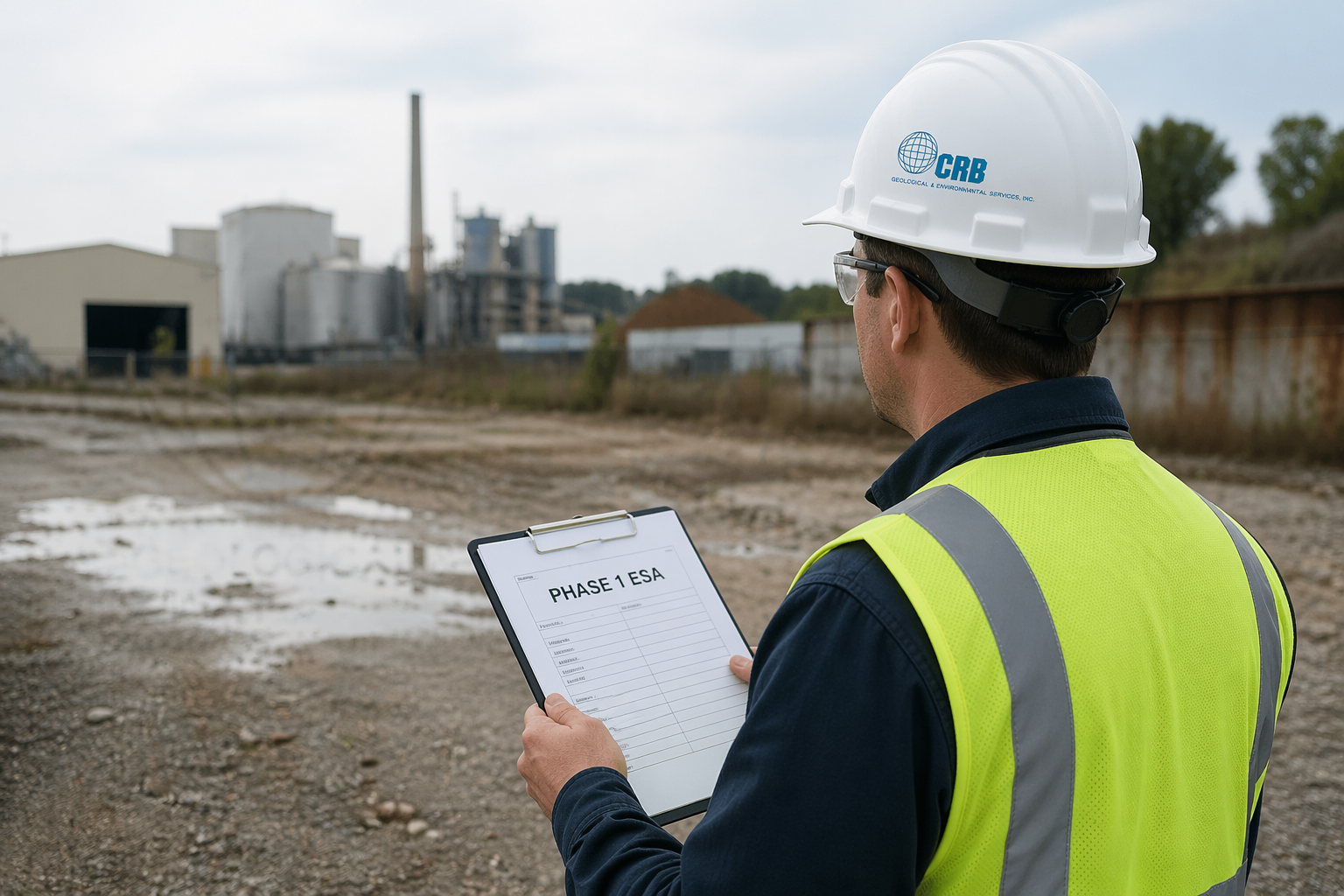
Phase I Environmental Site Assessments in Idaho
Understand the environmental history behind the property before you close. CRB provides ASTM E1527-21 compliant Phase I ESAs for commercial real estate transactions throughout Idaho, helping buyers, lenders, developers, and attorneys identify potential environmental concerns and understand what they mean for the transaction.
Buying, Financing or Redeveloping Commercial Property in Idaho?
ENVIRONMENTAL DUE DILIGENCE IN IDAHO
Environmental risk isn't always visible from the property you're standing on. Historical land use, former operations, adjoining properties, regulatory records, and past releases can all influence the environmental risk associated with a commercial property.
A Phase I ESA evaluates that history before a major property decision is made. For Idaho transactions, CRB combines the ASTM E1527-21 assessment process with review of relevant federal, state, local, and property-specific environmental information to identify Recognized Environmental Conditions (RECs) and other findings that may affect due diligence.
Acquiring Commercial Property
Understand potential environmental concerns before ownership changes hands and while transaction options are still available.
Financing or Refinancing
Provide lenders with environmental due diligence prepared in accordance with the applicable ASTM standard and project requirements.
Developing or Redeveloping Property
Understand historical environmental conditions that may warrant further evaluation before redevelopment plans advance.
Acquiring Land
Evaluate the history of vacant, agricultural, or previously developed land rather than assuming an undeveloped appearance means an uncomplicated environmental history.
Environmental Due Diligence in Idaho Starts With Understanding How the Property Was Used
THE PROPERTY'S HISTORY MATTERS
Idaho properties can carry environmental histories that aren't obvious from their current use. Agricultural operations, fuel storage, industrial and manufacturing activities, transportation uses, mining-related activity, commercial redevelopment, and conditions on adjoining properties can all warrant consideration during environmental due diligence.
A Phase I ESA doesn't assume these uses created contamination. It evaluates available information to determine whether past or current conditions indicate a Recognized Environmental Condition or another finding relevant to the assessment.
Agricultural & Former Agricultural Land
Historical farming and agricultural operations may warrant evaluation of features or activities such as fuel storage, chemical storage and handling, equipment maintenance areas, and other property-specific uses.
Industrial & Manufacturing Properties
Historical manufacturing, processing, maintenance, material storage, waste handling, and petroleum use can become important parts of the property's environmental history.
Fuel & Petroleum Uses
Current or former service stations, bulk fuel operations, underground storage tanks, and other petroleum-related uses may require closer review of regulatory and historical information.
Redevelopment Properties
Older commercial and industrial properties may have gone through multiple uses over decades. Understanding those uses before redevelopment can help identify environmental questions before they become project questions.
Vacant & Undeveloped Land
What a property looks like today does not necessarily tell you how it was used historically. Previous structures, agricultural operations, fill, adjoining uses, or other historical activities may still be relevant to environmental due diligence.
Properties Near Known Environmental Sites
The assessment also considers relevant surrounding properties and regulatory information rather than evaluating the subject property in isolation.

What CRB Evaluates During an Idaho Phase I ESA
THE CRB PHASE I PROCESS
-
Review available historical sources to understand how the subject property and surrounding area have changed over time.
-
Review applicable federal, state, and local environmental information for records relevant to the subject and surrounding properties.
-
Observe current property conditions and features that may be relevant to environmental due diligence.
-
Review information from owners, operators, occupants, and other appropriate sources when applicable to the assessment.
-
An Environmental Professional evaluates the information collectively rather than treating individual database records or historical uses as conclusions on their own.
-
CRB documents its findings, including identified RECs where applicable, in an ASTM E1527-21 compliant Phase I ESA report with conclusions the project team can understand.
The Finding Matters. Understanding What It Means Matters More.
BEYOND THE CHECKLIST
A database listing, former property use, or historical operation does not automatically mean a property is contaminated.
The Environmental Professional's job is to evaluate the available information in context and determine its significance under the Phase I ESA standard.
For the buyer, lender, developer, or attorney, that distinction matters.
You need to understand:
What was identified?
What environmental condition or historical use requires attention?
Why does it matter?
Does the information rise to the level of a REC or another relevant finding?
Does anything else need to happen?
Is additional records review appropriate? Is further investigation warranted? Or can the environmental due diligence process conclude at Phase I?
“The goal isn’t simply to uncover information. It’s to understand what that information means for the property decision in front of you.”
Different Parties Use the Phase I ESA for Different Decisions
BUILT AROUND THE TRANSACTION
Buyers & Investors
Understand what could change how you view the property.
Identify potential environmental concerns before acquisition and while due diligence decisions are still being made.
Commercial Lenders
Environmental due diligence that supports the lending decision.
Receive technically sound reporting prepared around the property, applicable standard, lender requirements, and transaction timeline.
Developers
Understand environmental history before it becomes a redevelopment question.
Evaluate prior property uses and potential environmental concerns before redevelopment or construction decisions advance.
Real Estate Attorneys
Technical findings built to withstand scrutiny.
Get clear documentation of the environmental professional's assessment and conclusions to support transaction and client discussions.
A REC Does Not Automatically Mean the Property Is Contaminated
WHEN ADDITIONAL EVALUATION MAY BE NEEDED
A Recognized Environmental Condition is a finding defined within the ASTM Phase I ESA process. Identifying one does not, by itself, establish that contamination is present or mean that the transaction cannot proceed.
It means the finding needs to be understood in context. Depending on the condition and project objectives, additional evaluation may be appropriate.
REC IDENTIFIED
↓
UNDERSTAND THE BASIS FOR THE FINDING
↓
DETERMINE WHETHER ADDITIONAL INVESTIGATION IS APPROPRIATE
↓
PHASE II ESA, IF WARRANTED
↓
USE PROPERTY-SPECIFIC DATA TO INFORM THE NEXT DECISION
You Don't Have to Start Over With Another Consultant
If a Phase II ESA is warranted, CRB can continue from due diligence into property-specific investigation. The team already understands the property history, the Phase I findings, and why additional investigation was recommended.
Supporting Commercial Property Decisions Across Idaho
PHASE I ESA SERVICES THROUGHOUT IDAHO

From CRB's regional office in Twin Falls, our team supports commercial real estate due diligence throughout Idaho.
Then use geographic links only as those pages become real:
Boise & Treasure Valley
Twin Falls & Magic Valley
Idaho Falls & Eastern Idaho
Coeur d'Alene & North Idaho
Nampa
Meridian
Don't see your market listed? CRB provides Phase I Environmental Site Assessments for commercial properties throughout Idaho.
Idaho Phase I ESA Frequently Asked Questions
-
A Phase I ESA is not automatically required for every commercial property purchase in Idaho. It is commonly requested by lenders and used by buyers, developers, investors, and attorneys as part of environmental due diligence. A Phase I performed in accordance with applicable federal requirements can also play a role in satisfying All Appropriate Inquiries for parties seeking to qualify for certain CERCLA liability protections. EPA recognizes ASTM E1527-21 as consistent with the AAI rule.
-
No. A standard Phase I ESA is a non-invasive assessment and does not generally include collecting soil, groundwater, or soil-vapor samples. If findings indicate additional investigation is appropriate, a Phase II ESA may be recommended.
-
The ASTM assessment framework still governs the Phase I ESA, but the property's specific history determines what information is relevant. On current or former agricultural land, historical operations, chemical or fuel storage, equipment areas, structures, adjoining uses, and other property-specific conditions may warrant consideration.
-
The Environmental Professional evaluates applicable environmental records based on the property and ASTM requirements. Idaho DEQ maintains information about sites managed under several waste-management and remediation programs through resources such as its Facility Mapper, but DEQ notes that the mapper is informational and may not contain every site or complete locational information.
-
A REC does not automatically establish that contamination is present. CRB evaluates the basis for the finding and whether additional investigation may be appropriate. When property-specific environmental data are needed, a Phase II ESA may be recommended.
-
Yes. CRB supports commercial property due diligence throughout Idaho from its regional presence in Twin Falls.