
What Are Recognized Environmental Conditions (RECs)?
One of the primary objectives of a Phase I Environmental Site Assessment (Phase I ESA) is identifying potential environmental concerns that could affect a property's value, financing, redevelopment potential, or environmental liability. These concerns are commonly referred to as Recognized Environmental Conditions, or RECs.
RECs are among the most significant findings identified during a Phase I ESA because they may indicate the potential presence of environmental contamination and can influence transaction, lending, redevelopment, and risk-management decisions.
Understanding what a REC is, how it is identified, and what happens when one is found can help project stakeholders make informed decisions throughout the environmental due diligence process.
What Is a Recognized Environmental Condition (REC)?
Under ASTM E1527-21, a Recognized Environmental Condition is generally defined as:
The presence or likely presence of hazardous substances or petroleum products in, on, or at a property due to a release, likely release, or material threat of a release into the environment.
In simpler terms, a REC indicates that environmental professionals have identified information suggesting the potential presence of environmental contamination associated with a property.
Why Are Finding RECs Important?
Recognized Environmental Conditions matter because they can influence:
Commercial real estate transactions
Property acquisitions
Lender decisions
Redevelopment projects
Environmental liability considerations
Property value assessments
Future environmental investigations
The identification of a REC does not automatically mean contamination exists. Rather, it indicates that environmental professionals have identified information suggesting the potential for contamination that may require additional evaluation.
For buyers, lenders, and investors, RECs help provide visibility into environmental risks that could impact future ownership or development plans.
How Are RECs Identified During a Phase I ESA?
Environmental professionals identify RECs through multiple components of the Phase I Environmental Site Assessment process.
Site Reconnaissance
During the site visit, environmental consultants evaluate current property conditions and look for indicators that may suggest environmental concerns.
Examples may include:
Evidence of spills or leaks
Stained soils
Chemical storage areas
Abandoned drums or containers
Underground storage tanks
Improper waste handling practices
Historical Records Review
Historical property uses are often one of the most important factors in identifying potential RECs.
Environmental professionals review:
Historical aerial photographs
Sanborn Fire Insurance Maps
Historical city directories
Topographic maps
Building permits
Property records
Historical operations such as gas stations, dry cleaners, manufacturing facilities, automotive repair shops, agricultural operations, and industrial uses may indicate elevated environmental risk.
Regulatory Database Review
Federal, state, and local environmental databases are reviewed to identify known environmental concerns associated with the property or surrounding area.
These records may reveal:
Petroleum releases
Hazardous waste sites
Regulatory enforcement actions
Environmental cleanup projects
Underground storage tank registrations
Interviews
Discussions with property owners, operators, occupants, and local officials may provide additional information regarding historical site conditions and environmental concerns.
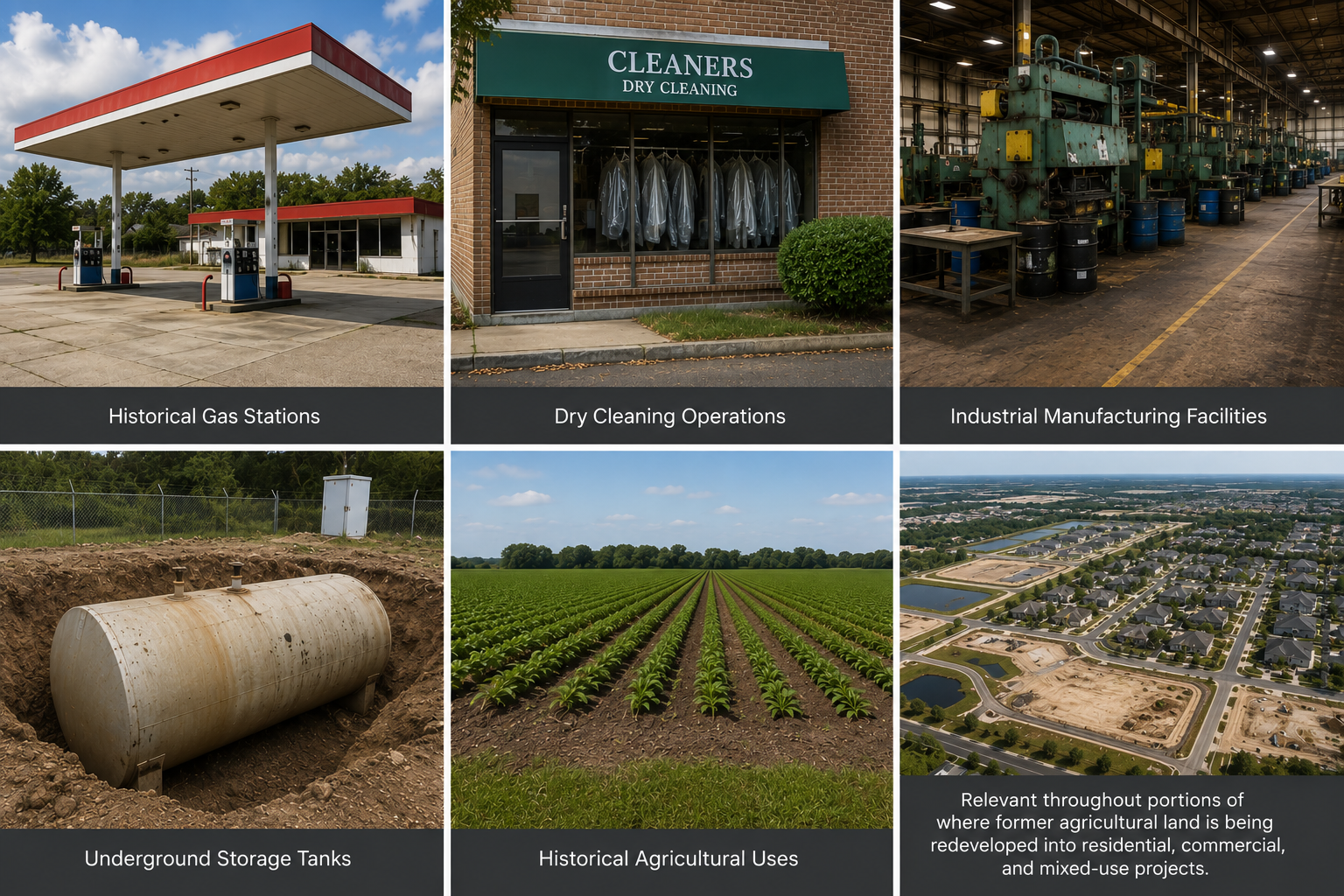
Common Examples of Recognized Environmental Conditions
Historical Gas Stations
Properties previously used as gas stations often present concerns related to petroleum releases, underground storage tanks, and historical fuel handling activities.
Dry Cleaning Operations
Historically, many dry cleaning facilities utilized solvents that can persist in soil and groundwater long after operations have ceased.
Industrial Manufacturing Facilities
Manufacturing operations may involve hazardous materials, chemicals, petroleum products, and waste streams that create environmental concerns.
Underground Storage Tanks
Current or historical underground storage tanks frequently warrant additional evaluation due to the potential for leaks or releases.
Historical Agricultural Uses
Agricultural properties may raise concerns related to historical pesticide, herbicide, and chemical applications.
This is particularly relevant throughout portions of South Florida where former agricultural land is being redeveloped into residential, commercial, and mixed-use projects.
Off-Site Migration and Adjacent Property Impacts
In some cases, environmental professionals identify concerns related to neighboring or nearby properties with known releases, historical contamination, or environmentally sensitive operations. Because contaminants can migrate through soil, groundwater, or vapor pathways, adjacent property conditions may contribute to the identification of a REC during a Phase I ESA.
Does Finding a REC Mean a Property Is Contaminated?
Not necessarily.
One of the most common misconceptions surrounding Phase I ESAs is that identifying a REC automatically means contamination exists.
A REC indicates that sufficient evidence exists to warrant concern regarding the potential presence of hazardous substances or petroleum products.
Additional investigation may ultimately determine that:
Contamination is present.
Contamination is not present.
Further evaluation is unnecessary.
The purpose of a REC is to identify potential risk, not confirm contamination.
What Happens After a REC Is Identified?
When a REC is identified, environmental consultants may recommend additional investigation.
In many cases, the next step is a Phase II Environmental Site Assessment.
A Phase II ESA may involve:
Soil sampling
Groundwater sampling
Vapor intrusion evaluation
Laboratory testing
Environmental data analysis
The objective is to determine whether contamination is present and evaluate its extent.
Related Resource:
When Does a Phase I ESA Lead to a Phase II ESA?
Other Environmental Condition Classifications
ASTM E1527-21 includes additional environmental condition classifications that may appear in a Phase I ESA report.
Historical Recognized Environmental Conditions (HRECs)
An HREC refers to a past release that has been addressed to the satisfaction of regulatory authorities and no longer requires additional action.
Controlled Recognized Environmental Conditions (CRECs)
A CREC refers to contamination that remains in place but is managed through engineering controls, institutional controls, or activity limitations. Understanding the distinction between RECs, HRECs, and CRECs is important when evaluating environmental risk and future property obligations.
Recognized Environmental Conditions (RECs) are one of the most important findings identified during a Phase I Environmental Site Assessment. They serve as indicators of potential environmental risk and help stakeholders determine whether additional evaluation may be appropriate.
While a REC does not automatically mean contamination exists, it does signal that environmental professionals have identified information suggesting a release, likely release, or material threat of a release of hazardous substances or petroleum products.
For lenders, developers, investors, attorneys, and property owners, understanding RECs is an essential part of the environmental due diligence process and can help support informed commercial real estate decisions.