
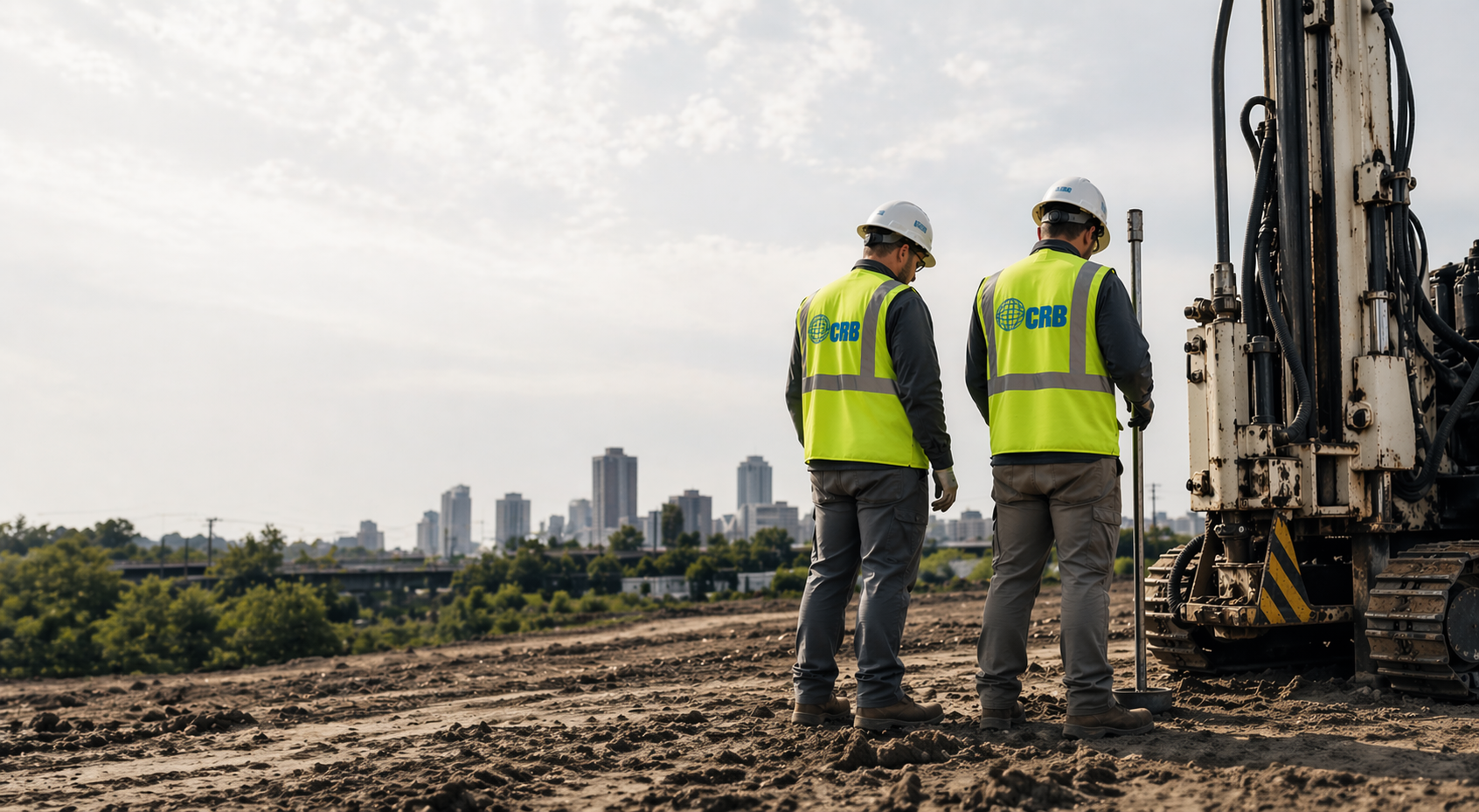
Phase II Environmental Site Assessment Services (Phase II ESA)
When environmental concerns are identified, you need answers—not assumptions.
When a Phase I ESA identifies a Recognized Environmental Condition, CRB's targeted soil, groundwater, and vapor sampling gives buyers, lenders, and developers the data they need to move forward with confidence.
A Phase II Environmental Site Assessment (Phase II ESA) is a targeted subsurface investigation used to determine whether contamination is actually present at a property, and if so, how far it extends. Where a Phase I ESA relies on historical records and a site visit, a Phase II ESA collects physical evidence, soil, groundwater, or soil vapor samples tested by a certified laboratory, to replace uncertainty with data.
A Phase II ESA is most often performed after a Phase I ESA identifies a Recognized Environmental Condition (REC), though it may also be requested any time a lender, buyer, or property owner needs direct confirmation of subsurface conditions.
What Is a Phase II Environmental Site Assessment?
Why Commercial Real Estate Teams Choose CRB for Phase II Environmental Site Assessments
A Phase II ESA carries more weight than the sampling results on the page. Lenders rely on it to clear underwriting. Buyers rely on it to close with confidence. Attorneys rely on it to hold up under scrutiny if the transaction is ever questioned. CRB designs every investigation around that reality, not just around collecting samples.
Since 1992, CRB has delivered defensible, senior-reviewed Phase II Environmental Site Assessments for commercial real estate transactions nationwide. Every project is directed by an experienced environmental professional, with direct access to the person actually managing your investigation, not a rotating point of contact. When findings are complex, we explain what they mean in plain language and outline your real options, so a Phase II ESA becomes a tool for moving your transaction forward, not another source of delay.
When Is a Phase II Environmental Site Assessment Recommended?
A Phase II ESA is most often recommended when a Phase I Environmental Site Assessment identifies a Recognized Environmental Condition, though it may also be requested any time historical property use, regulatory records, or known site conditions raise a specific environmental question that needs a direct answer.
A Phase II ESA may be appropriate when evaluating concerns associated with:
Recognized Environmental Conditions (RECs) identified during a Phase I ESA
Historical or current underground and aboveground storage tanks
Former gas stations or fueling operations
Dry cleaning operations
Industrial or manufacturing activities
Historical agricultural land use and potential pesticide or chemical impacts
Known or suspected petroleum or hazardous substance releases
Regulatory listings or documented environmental incidents
Potential impacts from adjoining or nearby properties
Other site-specific conditions that warrant subsurface investigation or environmental sampling
A potential concern identified during due diligence does not automatically mean contamination is present. A properly scoped Phase II ESA is designed to collect the site-specific data needed to evaluate that concern directly and support the next decision, whether that's closing the deal, negotiating terms, or planning further investigation.
Phase II ESA Experience Across Every Commercial Property Type
Former Gas Stations & Fueling Operations
Underground storage tanks, fuel lines, and dispenser islands are among the most common sources of a Phase II ESA. We design soil and groundwater sampling around former tank locations and known petroleum release areas to determine the extent of impact.
Dry Cleaners & Industrial Laundry Sites
Historical dry cleaning operations often leave behind solvent contamination in soil and groundwater, and sometimes in soil vapor beneath adjacent buildings. Our Phase II ESAs are scoped to test for these compounds specifically, not just as a generic panel.
Industrial & Manufacturing Facilities
Former manufacturing sites frequently carry complex, layered histories of chemical use, storage, and disposal. We evaluate soil and groundwater across multiple potential source areas to characterize contamination that a Phase I ESA alone couldn't confirm.
The right Phase II ESA scope depends on what the property actually was, not just what it is today. Since 1992, CRB has designed Phase II investigations for a wide range of commercial property types nationwide, tailoring the sampling plan to the specific risk each site presents.
Retail & Shopping Centers
Retail properties may have housed a gas station, auto shop, or dry cleaner decades before their current use. Our Phase II ESAs target the specific footprint of that former tenant, even when the building above it has since changed completely.
Multifamily & Redevelopment Sites
Vacant land and redevelopment parcels can carry unseen risk from historical fill material, prior industrial use, or nearby contamination sources. We help developers confirm subsurface conditions before construction begins, when addressing an issue is far less costly.
Agricultural Land
Former agricultural sites may carry pesticide or chemical residue in soil that a Phase I ESA can only flag as a possibility. Our Phase II ESAs test directly for these compounds to confirm whether redevelopment or conversion is viable.
Unlike a Phase I ESA, a Phase II ESA has no standardized checklist. The scope is built around the specific environmental concern being investigated and the conditions of the property itself, so no two Phase II ESAs look exactly alike.
When developing a Phase II ESA scope, our environmental professionals consider:
Recognized Environmental Conditions (RECs) identified during a Phase I ESA
Historical and current property uses
Known or suspected sources of petroleum products or hazardous substances
The location and nature of underground or aboveground storage tanks
Previous spills, releases, or environmental investigations
Regulatory records and documented environmental conditions
Site layout, geology, and anticipated groundwater conditions
Potential contaminant migration pathways
Project timeline and redevelopment plans
Based on these factors, we identify the right sampling locations, environmental media, and analytical parameters, whether that means a single soil boring or a full groundwater monitoring program. The goal is data that actually answers your question, not data for its own sake.
How Is the Scope of a Phase II Environmental Site Assessment Determined?
A Phase II ESA moves from paper to physical evidence. Depending on the scope, that typically means the following steps, carried out under a strict quality assurance program from start to finish. Depending on the scope of the investigation, Phase II ESA activities may include:
1. Field Sampling
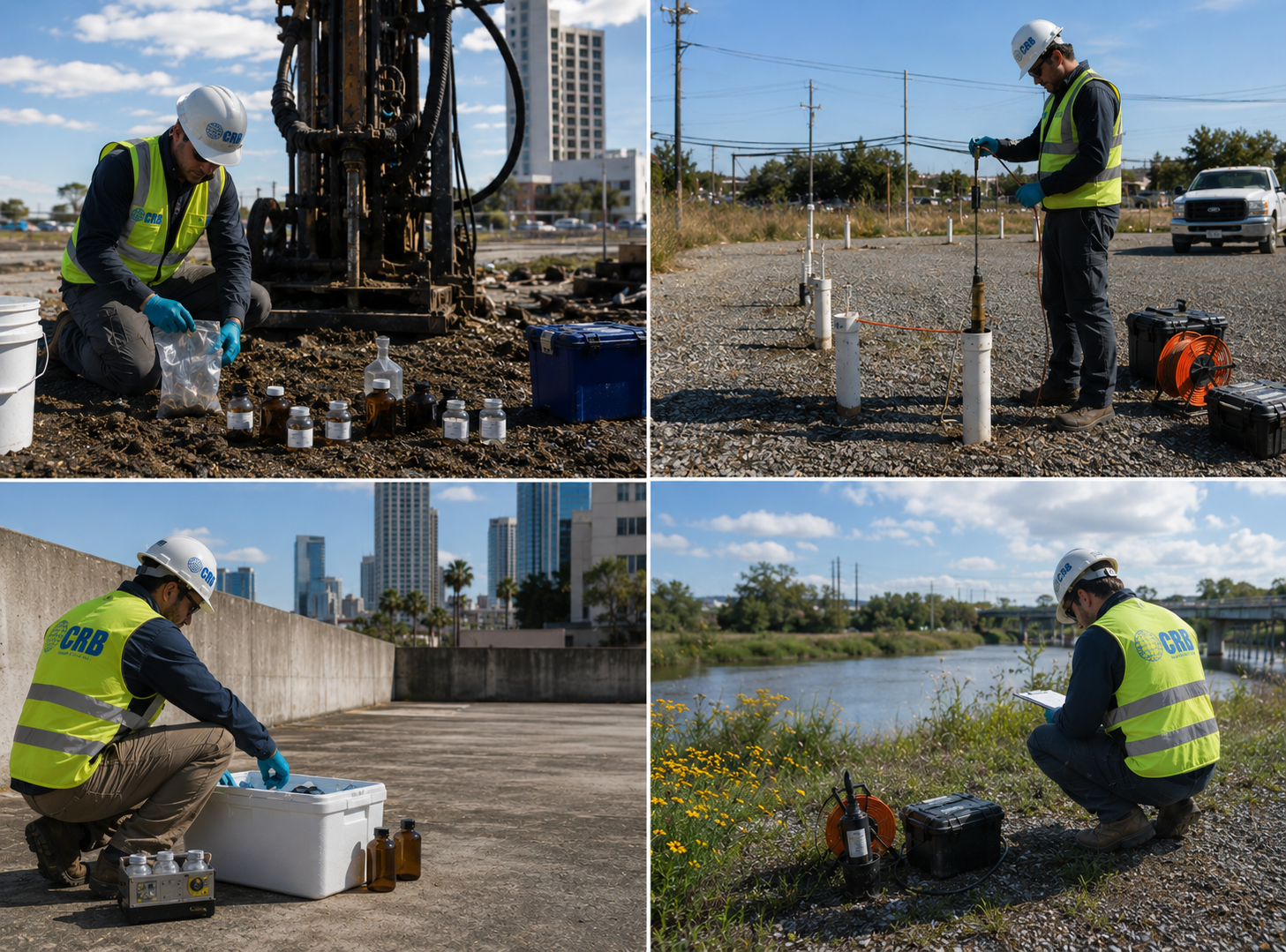
Our team collects soil samples using hand augers, direct-push equipment, or drill rigs from targeted locations and depths. When groundwater is a concern, we install temporary or permanent monitoring wells to collect representative samples. Where volatile compounds are suspected, soil vapor or sub-slab vapor sampling evaluates vapor intrusion risk.
2. Laboratory Analysis
Samples are analyzed by a certified laboratory for the contaminants relevant to the site's history, petroleum-related compounds, VOCs, SVOCs, metals, pesticides, or other site-specific analytes, using approved methods and strict chain-of-custody procedures.
3. Data Evaluation
Results are compared against applicable regulatory screening levels or project-specific criteria. Our environmental professionals evaluate what the data actually shows, not just whether a number exceeds a threshold, since context determines what a result means for your transaction.
4. Reporting & Recommendations
You receive a clear, technically defensible report explaining what was found, what it means, and what your realistic options are, ranging from no further action needed to a defined path for additional investigation or remediation.
What Does a Phase II Environmental Site Assessment Involve?
THE PATH FORWARD
Confirming site conditions through subsurface investigation and laboratory testing turns environmental uncertainty into something you can actually act on. Buyers, lenders, developers, and property owners all use Phase II ESA findings differently, but the goal is the same: a decision made with real data instead of a guess.
Commercial Property Acquisition Confidence
Verified environmental data helps buyers understand site conditions before acquisition, reducing uncertainty and supporting a more informed purchase decision.
Lender Environmental Due Diligence Clarity
Phase II findings give lenders the defensible environmental data needed to evaluate risk during underwriting and financing approval, without unnecessary delays.
Redevelopment Feasibility Assessment
Investigation results help developers assess whether contamination could affect redevelopment planning, entitlement timelines, construction schedules, or project costs, before those costs are locked in.
Environmental Cost Forecasting
Defining the extent of contamination early lets project teams anticipate remediation requirements and corrective action costs, instead of discovering them mid-project.
Environmental Liability Mitigation
Identifying environmental conditions early reduces exposure to unexpected liabilities that could affect transaction certainty or long-term property usability.
How Phase II ESA Findings Support Commercial Real Estate Decisions
Frequently Asked Questions About Phase II Environmental Site Assessments
-
A Phase II Environmental Site Assessment (Phase II ESA) is an environmental investigation used to evaluate specific environmental concerns associated with a property. Depending on the scope, a Phase II ESA may involve targeted soil, groundwater, soil vapor, or other environmental sampling and laboratory analysis to collect site-specific data about potential environmental impacts.
-
A Phase II ESA may be recommended when environmental due diligence identifies specific concerns that warrant further investigation. These concerns may arise from Recognized Environmental Conditions (RECs) identified during a Phase I ESA, historical property uses, known or suspected releases, regulatory records, previous environmental investigations, or other site-specific information.
-
No. Although a Phase II ESA is often performed to investigate concerns identified during a Phase I Environmental Site Assessment, a Phase II may also be conducted when environmental concerns are already known or documented. The need for a Phase II ESA and the appropriate scope depend on the specific property, available environmental information, and objectives of the investigation.
-
The contaminants evaluated during a Phase II ESA depend on the specific environmental concerns and historical or current uses associated with the property. Laboratory analysis may evaluate petroleum-related compounds, volatile organic compounds (VOCs), semi-volatile organic compounds (SVOCs), metals, pesticides, or other contaminants of potential concern. Not every Phase II ESA tests for the same substances; analytical parameters should be selected based on site-specific conditions and the objectives of the investigation.
-
A Phase II ESA may include soil sampling, groundwater sampling, soil vapor assessment, or other environmental testing, depending on the concerns being investigated. Not every Phase II ESA requires evaluation of every environmental medium. Sampling locations, depths, methods, and analytical parameters are developed based on site-specific conditions and the investigation objectives.
-
The timeline for a Phase II ESA varies depending on the scope of the investigation, site access, drilling or sampling requirements, laboratory turnaround times, and the complexity of the environmental conditions being evaluated. CRB develops project-specific schedules based on the investigation scope and client timeline.
-
The cost of a Phase II ESA depends on factors such as the number and type of sampling locations, drilling requirements, environmental media being evaluated, laboratory analyses, site accessibility, and overall investigation complexity. Because Phase II investigations are site-specific, CRB prepares project-specific proposals based on the environmental concerns and scope of work required.
-
If laboratory results or other investigation findings indicate that contaminants are present, the appropriate next steps depend on the nature and extent of the impacts, detected concentrations, affected environmental media, applicable regulatory criteria, and project objectives. Additional site characterization, regulatory coordination, environmental remediation, corrective action, or other site-specific measures may be appropriate. The identification of contamination does not automatically mean that extensive remediation will be required or that a property transaction cannot proceed.
-
If the investigation does not identify the contaminants of potential concern at the sampled locations or at concentrations relevant to the investigation objectives, the results may help address the specific environmental concerns that prompted the Phase II ESA. Conclusions should be based on the scope and limitations of the investigation, and additional evaluation may still be appropriate if significant data gaps or unresolved environmental concerns remain.
-
Yes. When Phase II ESA findings indicate that additional action is appropriate, CRB can support clients with further site investigation, environmental remediation and corrective action, regulatory coordination, and related environmental consulting services. This allows CRB to provide continuity from initial environmental due diligence through investigation and, when necessary, subsequent environmental response activities.