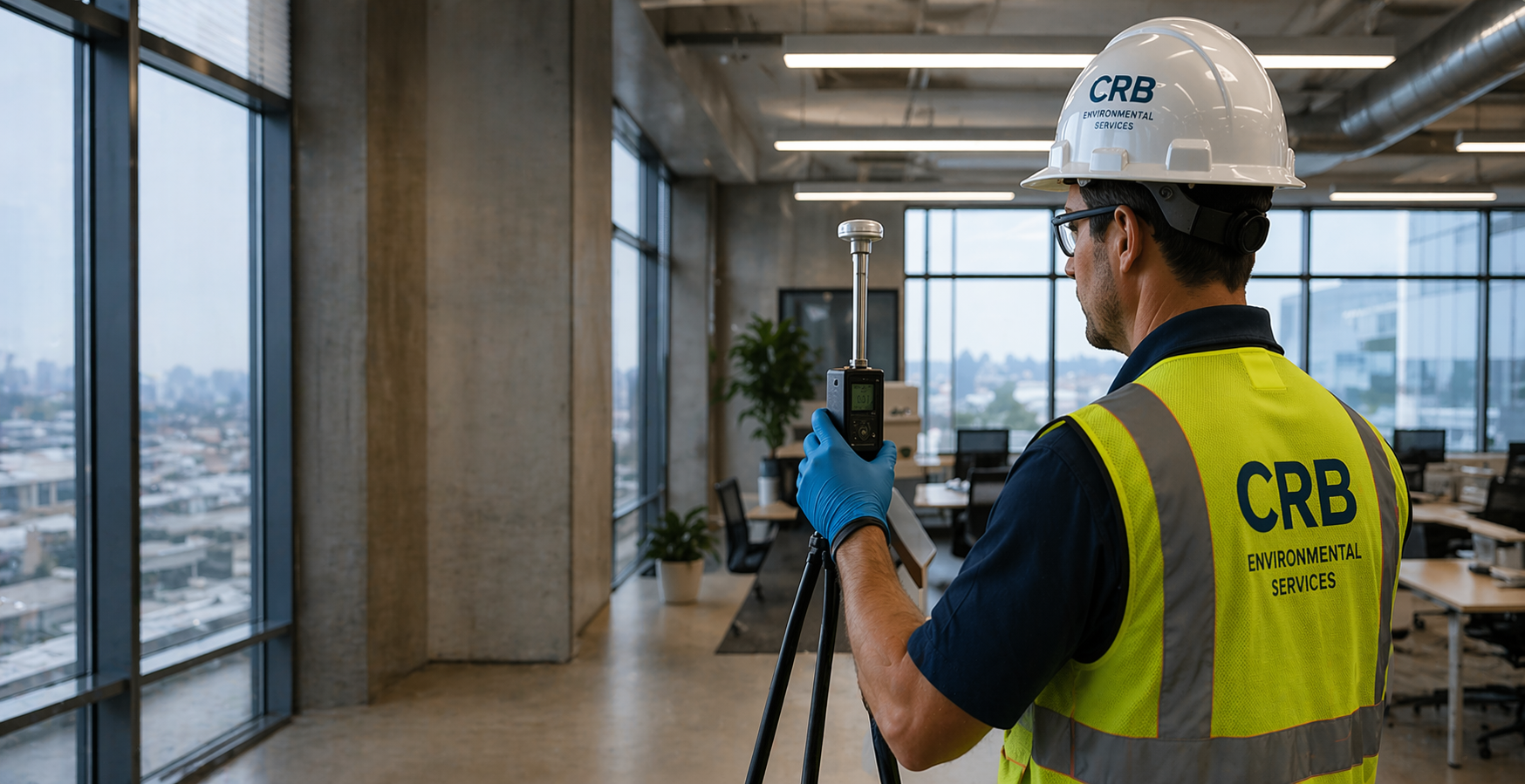
Commercial Indoor Air Quality & Indoor Environmental Quality Assessments
Comprehensive IAQ testing and vapor intrusion investigation for occupied buildings, pre-lease due diligence, tenant complaints, and sites overlying known groundwater contamination.
When indoor air quality concerns arise, uncertainty can quickly affect your employees, occupants, and day-to-day operations. Complaints about odors, discomfort, or air quality often raise difficult questions, but finding the cause is rarely straightforward. You need more than air sampling. You need an experienced environmental consultant who can investigate the problem, identify what's contributing to it, and provide clear recommendations you can act on.
CRB partners with facility managers, facility directors, property owners, employers, healthcare organizations, and commercial real estate professionals to investigate indoor environmental concerns in occupied buildings. Every assessment is tailored to your facility, combining technical expertise with a practical understanding of building systems, occupant concerns, and business operations.
Our goal is to identify the root cause, clearly explain our findings, and provide practical solutions that help you resolve the issue as efficiently as possible.
Why Organizations Choose CRB for Indoor Air Quality Assessments
Investigations Focused on Finding the Root Cause
No two indoor air quality concerns are the same. Every assessment is designed around your building, the concerns being reported, and the conditions observed during our investigation. We evaluate the factors that influence indoor air quality, including ventilation, HVAC systems, moisture conditions, building materials, occupant activities, and potential contaminant sources, so we can identify the root cause instead of simply documenting symptoms.
Clear Answers You Can Act On
Testing is only one part of the investigation. We explain our findings in plain language and provide practical recommendations that help you understand the results, prioritize next steps, and make informed decisions for your building and its occupants.
Responsive Support with Minimal Disruption
Indoor air quality concerns often require timely action. Our team works efficiently with property owners, facility managers, employers, healthcare organizations, and project teams to complete assessments while minimizing disruption to building operations. Throughout the process, you'll receive clear communication and responsive support so you always know where your project stands.
Solutions That Go Beyond the Assessment
Our work doesn't end when the testing is complete. If indoor environmental concerns are identified, we provide practical recommendations to help you address the issue, improve indoor air quality, and restore confidence in your building. Our goal is to help you move from uncertainty to resolution as efficiently as possible.
Indoor air quality issues can have many different causes, and symptoms are not always easy to trace back to a single source. CRB investigates a wide range of indoor environmental concerns by evaluating the building, identifying potential contributing factors, and recommending the most appropriate testing strategy based on your specific situation.
Whether you're responding to occupant complaints, investigating a persistent issue, or proactively evaluating your facility, our team provides the technical expertise needed to identify the source of the problem and help you determine the most appropriate next steps.
Indoor Air Quality Problems We Help Solve
Ventilation & HVAC Performance Concerns
Poor ventilation and HVAC system deficiencies can contribute to occupant discomfort and reduced indoor air quality. We evaluate ventilation performance and building conditions to determine whether air distribution or ventilation may be contributing to reported concerns.

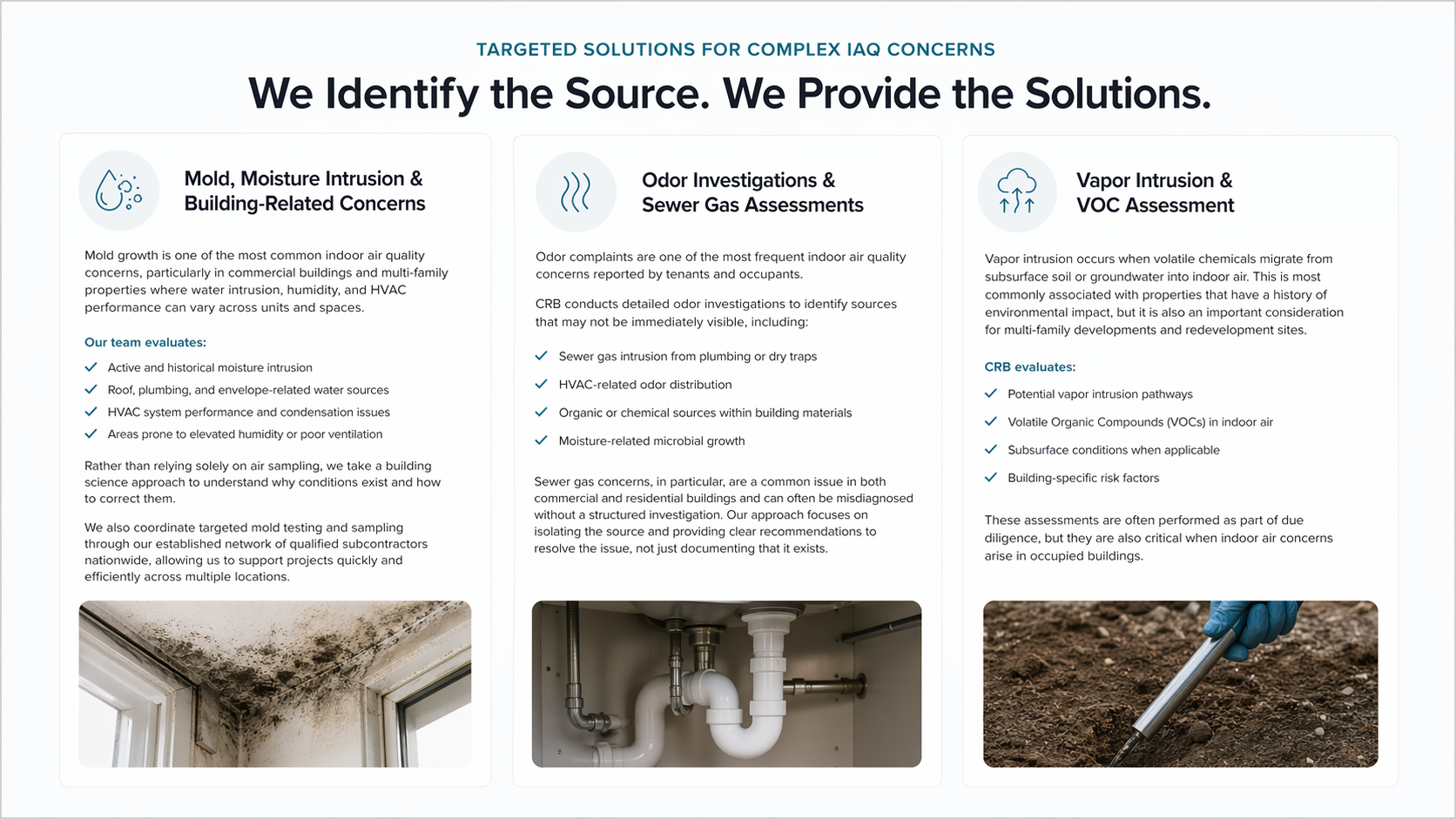
Suspected Mold & Moisture Intrusion
Moisture problems can affect indoor air quality and contribute to mold growth if left unresolved. Our assessments help identify moisture sources, evaluate areas of concern, and determine whether additional investigation or corrective action is warranted.

Employee & Occupant Health Complaints
Recurring complaints about headaches, eye irritation, respiratory discomfort, fatigue, or other symptoms can indicate underlying indoor environmental concerns. We investigate potential contributing factors and assess whether indoor air quality may be affecting building occupants.

Persistent Odors
Poor ventilation and HVAC system deficiencies can contribute to occupant discomfort and reduced indoor air quality. We evaluate ventilation performance and building conditions to determine whether air distribution or ventilation may be contributing to reported concerns.

Volatile Organic Compounds (VOCs) & Chemical Exposure
Building materials, furnishings, cleaning products, manufacturing processes, and other sources can release volatile organic compounds into indoor environments. We evaluate potential VOC concerns and recommend testing when chemical exposure is suspected.

Building-Related Indoor Environmental Concerns
Not every indoor air quality issue has an obvious cause. When the source of a problem is unclear, CRB conducts a comprehensive assessment of the building and its indoor environment to identify potential contributing factors and develop practical recommendations for resolution.
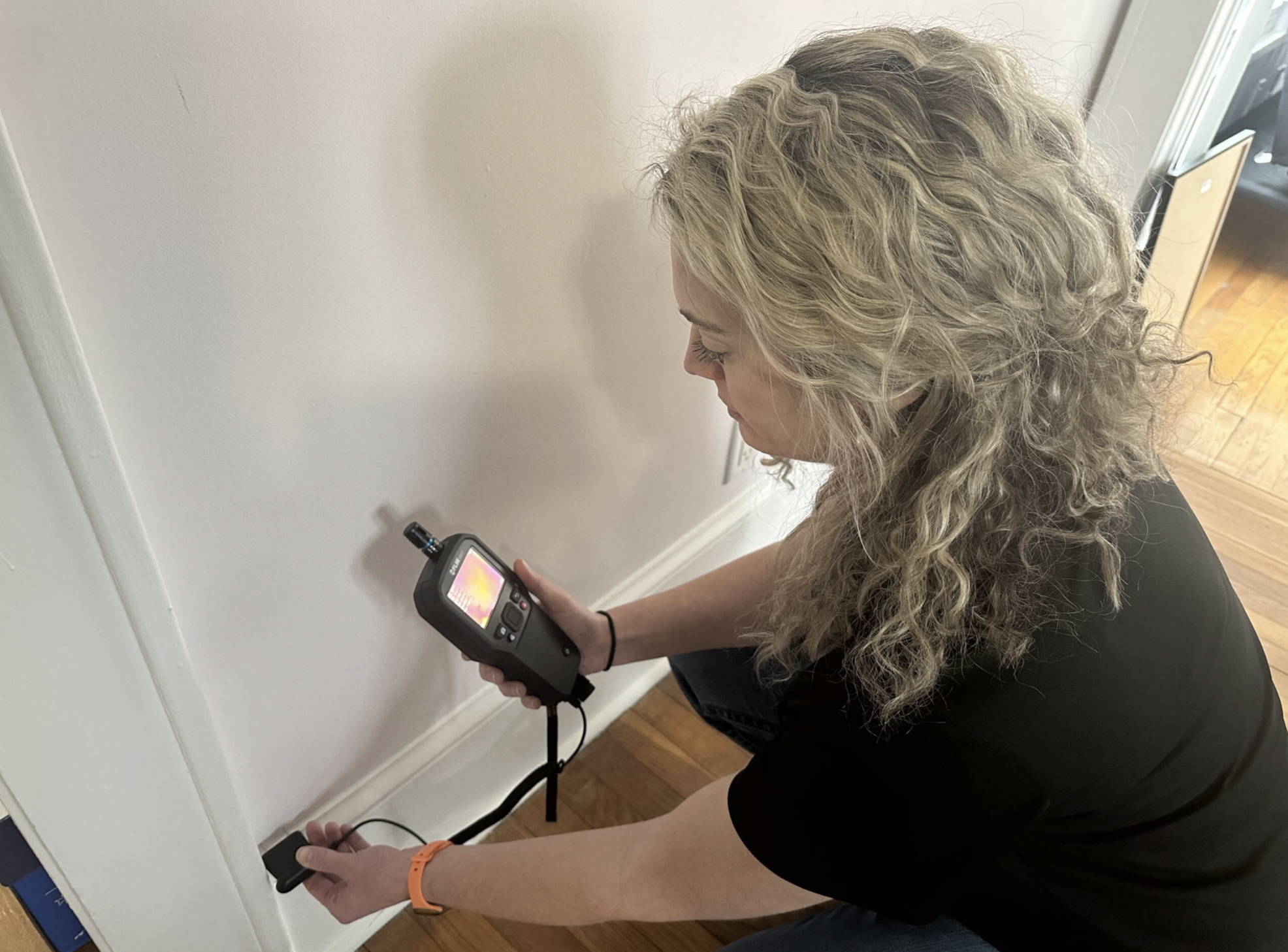
Our Indoor Air Quality Assessment Process
Building Evaluation & Investigation
Every project begins with a review of occupant concerns, building history, HVAC systems, moisture conditions, ventilation, and other factors that may be affecting indoor air quality. When appropriate, we also evaluate nearby environmental conditions and the potential for vapor intrusion or other external contaminant sources.
Targeted Indoor Air Quality Testing
Based on our findings, we develop a site-specific testing strategy designed to answer the environmental questions unique to your building. Depending on the conditions observed, testing may include indoor air sampling, outdoor baseline sampling, VOC testing, mold sampling, moisture assessments, surface sampling, or sub-slab vapor sampling when warranted.
Laboratory Analysis & Data Evaluation
Environmental samples are analyzed by accredited laboratories and evaluated against applicable industry guidelines, regulatory screening levels, and building-specific conditions. Our team reviews the results to identify potential sources of contamination and determine whether additional investigation or corrective action may be appropriate.
Findings & Practical Recommendations
You'll receive a clear, easy-to-understand report that explains our findings, identifies potential contributing factors, and provides practical recommendations tailored to your facility. If additional evaluation, corrective measures, or mitigation are recommended, we'll help you understand your options and the most appropriate path forward.
What Happens After an Indoor Air Quality Assessment?
An indoor air quality assessment doesn't end with laboratory results. The real value comes from understanding what the findings mean for your building and knowing what actions, if any, should be taken next.
If our assessment identifies conditions that may be affecting indoor air quality, we'll explain the findings in clear, practical terms and discuss recommendations based on your building, occupancy, and operational needs. Depending on the situation, recommendations may include additional investigation, moisture control measures, HVAC improvements, source removal, ventilation adjustments, or other corrective actions.
Not every investigation identifies a significant indoor environmental concern. In many cases, testing helps rule out potential causes and gives building owners and facility managers the information they need to focus on other issues with confidence.
Our role is to help you understand the results, prioritize the next steps, and provide practical guidance that supports a healthier indoor environment.
VETERINARY AND ANIMAL CARE FACILITIES
Specialized IAQ Solutions
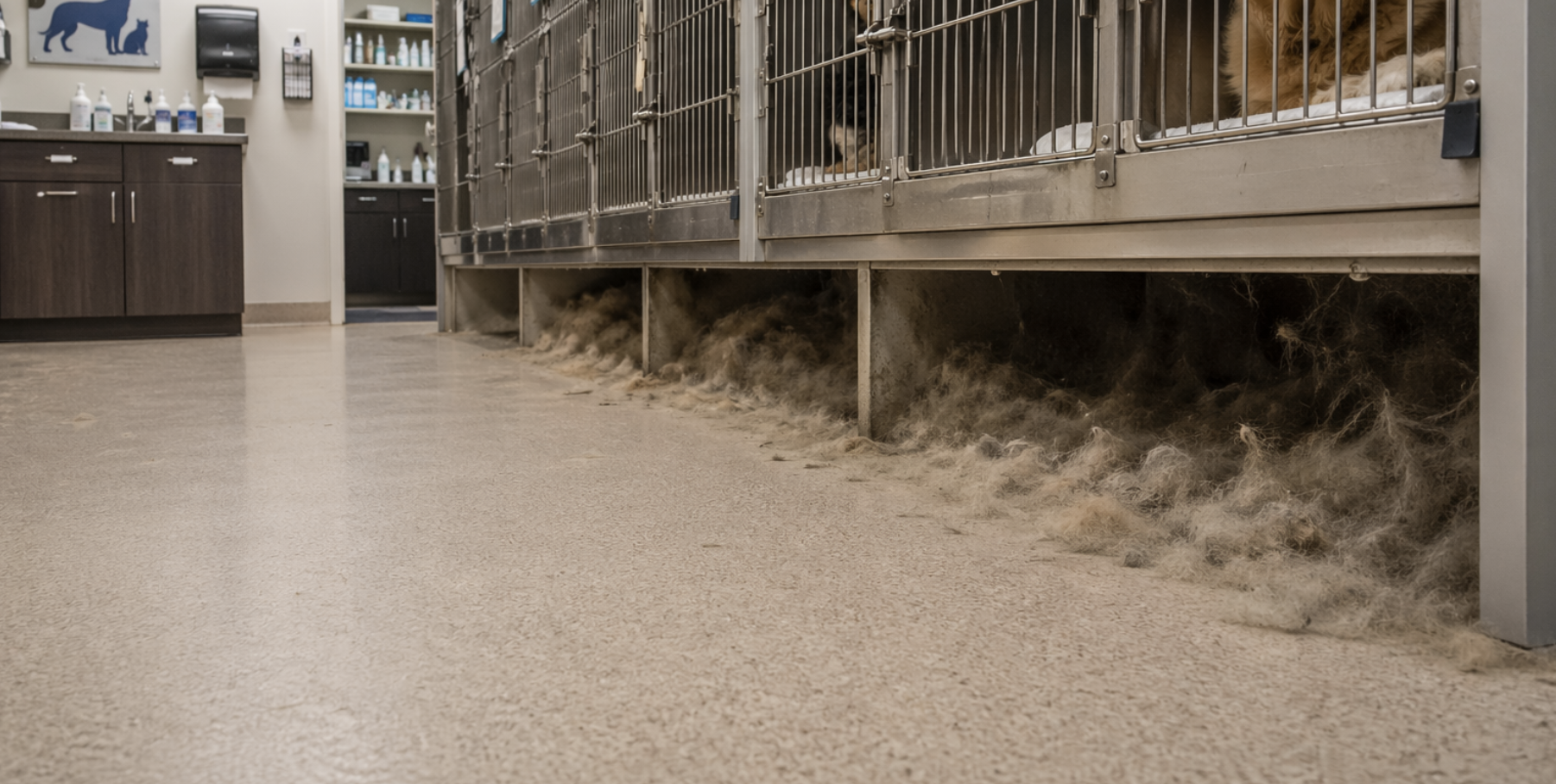
Indoor air quality challenges in veterinary clinics, animal hospitals, and boarding facilities require a specialized approach. Elevated particulate levels, animal dander, odors, and ventilation variability create conditions that standard IAQ testing does not fully address.
CRB provides targeted indoor air quality assessments for veterinary environments, helping identify air quality concerns, improve conditions for staff and animals, and support operational performance.

The CRB Air Quality Assessment Process
-
We begin by reviewing available background information to understand the full context of the concern. This includes building history, prior environmental reports, maintenance records, and any documented complaints from occupants.
-
Our team conducts a detailed on-site assessment of the property, with a focus on identifying conditions that contribute to indoor air quality concerns. This includes evaluating moisture intrusion pathways, ventilation and HVAC performance, building envelope conditions, and areas where contaminants may accumulate or migrate.
-
When appropriate, we perform or coordinate targeted sampling to support our observations and develop defensible conclusions. This may include indoor air sampling, surface sampling, moisture mapping, or material testing depending on site conditions.
-
Our findings are evaluated in the context of the building as a whole, not just isolated data points. We interpret results alongside site conditions, building systems, and observed deficiencies to identify the most likely source of the issue.
CRB provides practical, cost-conscious recommendations that are designed to resolve the problem, not just document it. Our reports are clear, defensible, and structured to support property managers, owners, and stakeholders in making informed decisions and taking the next steps toward resolution.
Frequently Asked Questions
-
Indoor air quality (IAQ) testing evaluates the quality of air inside buildings to identify potential health or comfort concerns such as mold spores, volatile organic compounds (VOCs), odors, carbon monoxide, radon, or other contaminants.
-
IAQ testing is often performed when occupants experience symptoms such as allergies or headaches, notice persistent odors, or report concerns after water damage, moisture intrusion, or ventilation issues.
-
Many industrial, manufacturing, and commercial facilities require air permits depending on equipment type, fuel usage, and emission levels. CRB helps determine whether your facility requires a permit and which regulations apply.
-
Indoor air quality assessments can often be completed within days while permitting and regulatory projects may take weeks depending on complexity and agency review timelines.
-
An indoor air quality assessment evaluates the presence, concentration, and potential sources of contaminants that can impact occupant health and building performance. This typically includes testing for mold spores, particulate matter, volatile organic compounds (VOCs), carbon dioxide, and other biological or chemical contaminants commonly found in indoor environments.
-
CRB provides:
Indoor air quality (IAQ) assessments
Mold, VOC, odor, and radon evaluations
Regulatory agency coordination