
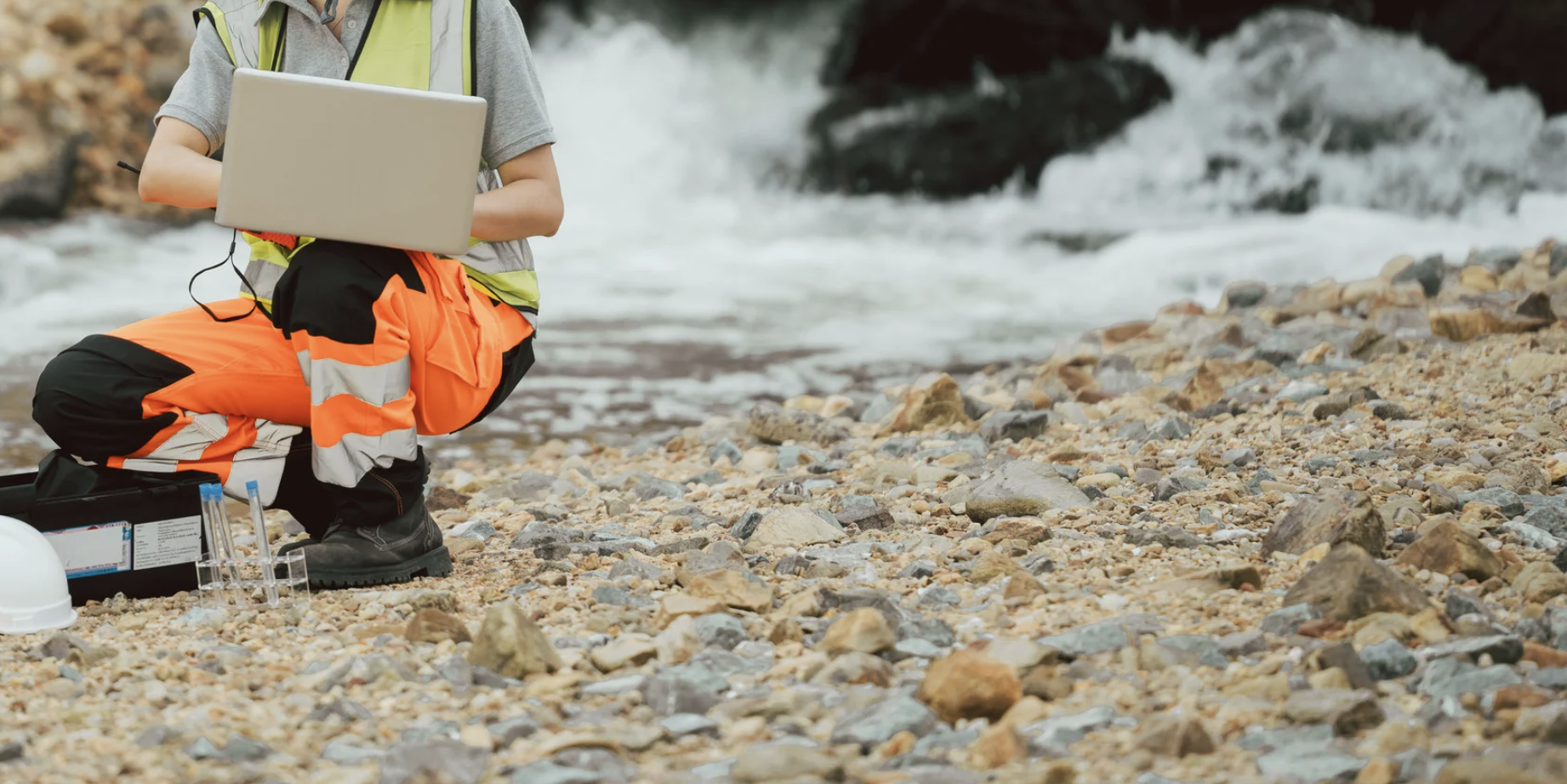
Phase II Environmental Site Assessment (ESA)
[Phase II Environmental Site Assessment]Confirm What’s Really in the Ground Before You Build, Buy, or Invest
When a Phase I Environmental Site Assessment identifies a potential environmental concern, the next question is simple: Is contamination actually present, and if so, how serious is it?
A Phase II Environmental Site Assessment (ESA) answers that question through targeted subsurface sampling and laboratory testing. This step is critical because assumptions are expensive. Unknown soil, groundwater, or vapor contamination can derail projects, delay or prevent financing, complicate redevelopment, and create significant liability if it is discovered too late.
CRB has been conducting Phase II ESAs and environmental site investigations for more than 34 years, completing over 200,000 environmental projects nationwide. Our clients include developers, property owners, lenders, attorneys, investors, and industrial operators who need clear, defensible data before moving forward with major financial and legal decisions.
A Phase II Environmental Site Assessment is a subsurface environmental investigation designed to confirm whether contamination is present and to determine its nature, extent, and potential risk.
Unlike a Phase I ESA, which is based on records review, interviews, and visual observations, a Phase II ESA involves direct sampling and laboratory analysis of environmental media, most commonly:
• Soil
• Groundwater
• Soil vapor or soil gas (when vapor intrusion is a concern)
A properly designed Phase II ESA:
• Confirms or rules out the presence of environmental contamination
• Determines which media are impacted and where
• Evaluates analytical results against regulatory or risk-based criteria
• Replaces uncertainty with real data
• Supports informed decisions about transactions, development, remediation, and risk management
In practical terms, a Phase II ESA answers a critical business question: “Do we have a contamination problem here, and what does it mean for this project?”
Without this information, decisions are based on assumptions. With it, they are based on facts.
What a Phase II ESA Is — and Why It Matters
Phase II ESAs are commonly performed when:
• A Phase I ESA identifies a Recognized Environmental Condition (REC)
• A lender, buyer, or investor needs confirmation of actual site conditions
• A property has a known or suspected history of contamination
• Redevelopment or construction plans require confirmation of subsurface conditions
• Regulatory agencies require site characterization or supporting data
If environmental uncertainty could affect your project timeline, budget, financing, or legal exposure, a Phase II ESA provides the clarity needed to move forward intelligently.
Who Needs a Phase II Environmental Site Assessment
CRB designs Phase II investigations to be focused, efficient, and technically defensible. We do not oversample or overcomplicate. Our goal is to collect the right data, in the right locations, to answer the right questions.
Every Phase II ESA begins with careful planning based on:
• The Phase I findings
• Site history and use
• Regulatory context
• The specific decision the client is trying to make
Depending on site conditions and project needs, a Phase II ESA may include:
• Soil Sampling: Collection of soil samples using hand augers, direct-push equipment, or drill rigs from targeted locations and depths.
• Groundwater Sampling: Installation of temporary or permanent monitoring wells, or use of wellpoints, to collect groundwater samples for laboratory analysis.
• Soil Vapor / Soil Gas Sampling: Evaluation of vapor intrusion risk using appropriate sampling methods when volatile compounds are a concern.
• Laboratory Analysis: Samples are analyzed by certified laboratories using approved analytical methods and strict quality control procedures.
• Data Evaluation: Results are evaluated against applicable regulatory standards, screening levels, or project-specific criteria.
All fieldwork is conducted under strict protocols, carefully documented, and managed under a court-defensible quality assurance program.
How CRB Conducts a Phase II ESA
If a Phase II ESA confirms that contamination is present, CRB can seamlessly support the next steps, including:
• Delineation of the extent of contamination
• Risk-based site characterization
• Remedial action planning and design
• Regulatory coordination and reporting
• Implementation of remediation and long-term monitoring
If contamination is not found, your Phase II ESA provides the documentation needed to reduce uncertainty and satisfy lenders, buyers, or stakeholders.
From Investigation to Action: What Happens Next

[The CRB Phase II ESA Process]
Investigation & Scope Development
We design a focused sampling plan based on site history, Phase I findings, and project goals.
Field Sampling & Data Collection
CRB conducts soil, groundwater, and/or vapor sampling using appropriate methods and protocols.
Laboratory Analysis & Quality Control
Samples are analyzed by certified labs and reviewed under strict QA/QC procedures.
Reporting & Recommendations
You receive a clear technical report explaining what was found, what it means, and what to do next.
A Phase II Environmental Site Assessment is the most direct way to understand what is actually happening beneath a property.
Talk to a CRB environmental professional today and get the data you need to move forward with confidence.
Ready to Replace Uncertainty with Facts?

-
A Phase II ESA is needed when a Phase I Environmental Site Assessment identifies potential environmental concerns, such as past fuel stations, dry cleaners, industrial uses, or other activities that may have caused contamination. It is commonly required during real estate transactions, redevelopment projects, and environmental due diligence.
-
A Phase II ESA typically includes environmental sampling and laboratory analysis of soil, groundwater, or soil vapor. The investigation is designed to confirm or rule out contamination and to evaluate the nature and extent of any environmental impacts.
-
Yes. Most Phase II ESAs involve drilling or direct-push sampling to collect soil and groundwater samples. Temporary or permanent monitoring wells may be installed depending on site conditions and project goals.
-
Yes. A Phase II ESA is a critical part of environmental due diligence when contamination is suspected. It provides factual, defensible data that supports decision-making for property acquisition, redevelopment, financing, and risk management.
-
A Phase II ESA helps you understand the true environmental condition of a property before you buy, sell, or develop it. While it does not eliminate liability, it allows you to manage risk, negotiate transactions, and plan appropriate corrective actions.
-
Phase II ESAs are commonly ordered by:
Property buyers and developers
Lenders and investors
Attorneys and due diligence teams
Property owners planning redevelopment
Companies evaluating environmental risk
-
Many lenders, investors, and regulatory agencies require a Phase II ESA when a Phase I ESA identifies environmental risk. It provides the data needed to evaluate liability, cleanup obligations, and transaction risk.
-
If contamination is confirmed, CRB will explain the findings, assess regulatory implications, and help develop next steps, which may include additional investigation, risk evaluation, or environmental remediation planning.
-
A Phase II ESA usually takes several weeks up to a few months to complete, depending on site access, sampling requirements, laboratory turnaround times, and regulatory coordination.
CRB can often accelerate schedules when transactions require faster results.