
Why Indoor Air Quality Matters in Veterinary Clinics and
Animal Facilities
Indoor air quality issues in veterinary clinics are often overlooked until they start affecting daily operations. By the time a facility is dealing with persistent odors, staff complaints, humidity concerns, or suspected mold, the problem has usually been building in the background for some time.
Veterinary clinics, animal hospitals, boarding facilities, and shelters operate in a much more demanding indoor environment than a typical office or retail space. Between animal dander, biological materials, disinfectants, moisture, enclosed treatment areas, and heavy daily use, air quality problems can develop quickly and become difficult to ignore.
For veterinary facility owners, operators, and multi-location groups, indoor air quality is not just a comfort issue. It can affect staff experience, patient conditions, operational consistency, and client perception. When concerns appear, a targeted indoor air quality assessment can help identify what is happening and what to do next.
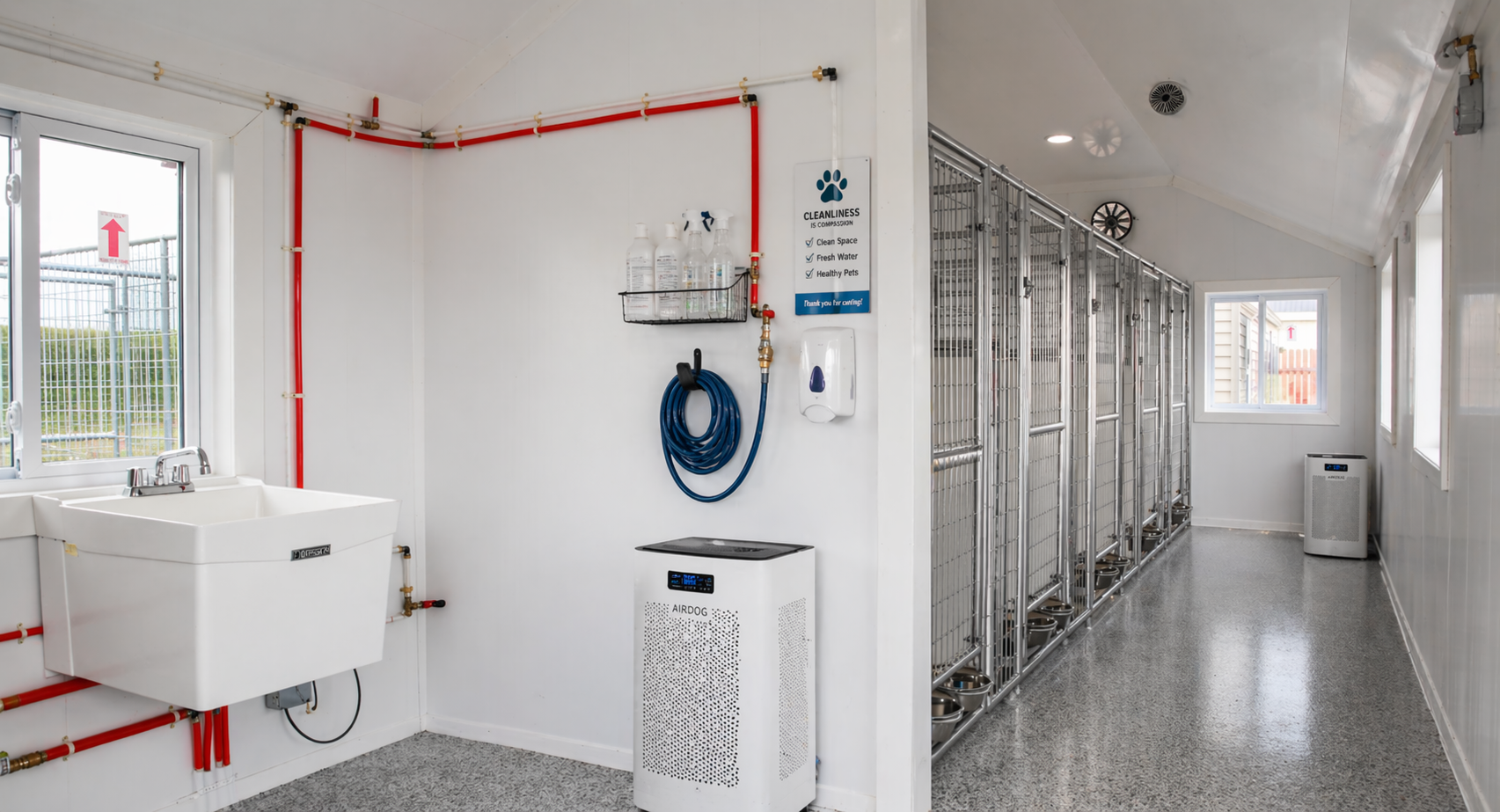
Signs Your Veterinary Clinic May Have Indoor Air Quality Problems
Many veterinary operators search for indoor air quality information because they are trying to answer one simple question: how do I know if this is actually a problem in my facility?
Common warning signs include:
Persistent odors in exam rooms, treatment spaces, kennels, or boarding areas
Staff complaints about stuffiness, irritation, headaches, or poor airflow
Ongoing humidity, condensation, or moisture concerns
Suspected mold growth or musty smells near wash areas, flooring, or walls
Ventilation issues affecting odor control or overall comfort
Air quality concerns that started during or after renovations
Inconsistent conditions from one room or building area to another
When these issues are recurring or difficult to explain, testing and assessment can help determine whether the problem is related to ventilation, moisture, biological load, chemical use, odor sources, or a combination of factors.
Why Veterinary Facilities Have Different Indoor Air Quality Risks
Veterinary and animal care facilities are fundamentally different from traditional commercial spaces. They bring together conditions that place greater pressure on indoor air quality every day.
These environments often include:
Higher levels of animal hair and dander
Biological materials and contaminants associated with treatment and animal occupancy
Frequent use of disinfectants, cleaning agents, and odor-control products
Moisture-prone areas such as kennels, wash stations, holding areas, and boarding spaces
Segmented rooms with inconsistent airflow or limited ventilation
Sensitive patient areas where clean, controlled conditions matter
This combination creates a more complex indoor environment. What may seem like a simple odor issue can actually involve ventilation performance, humidity, microbial growth, or contaminant buildup across multiple areas of the facility.
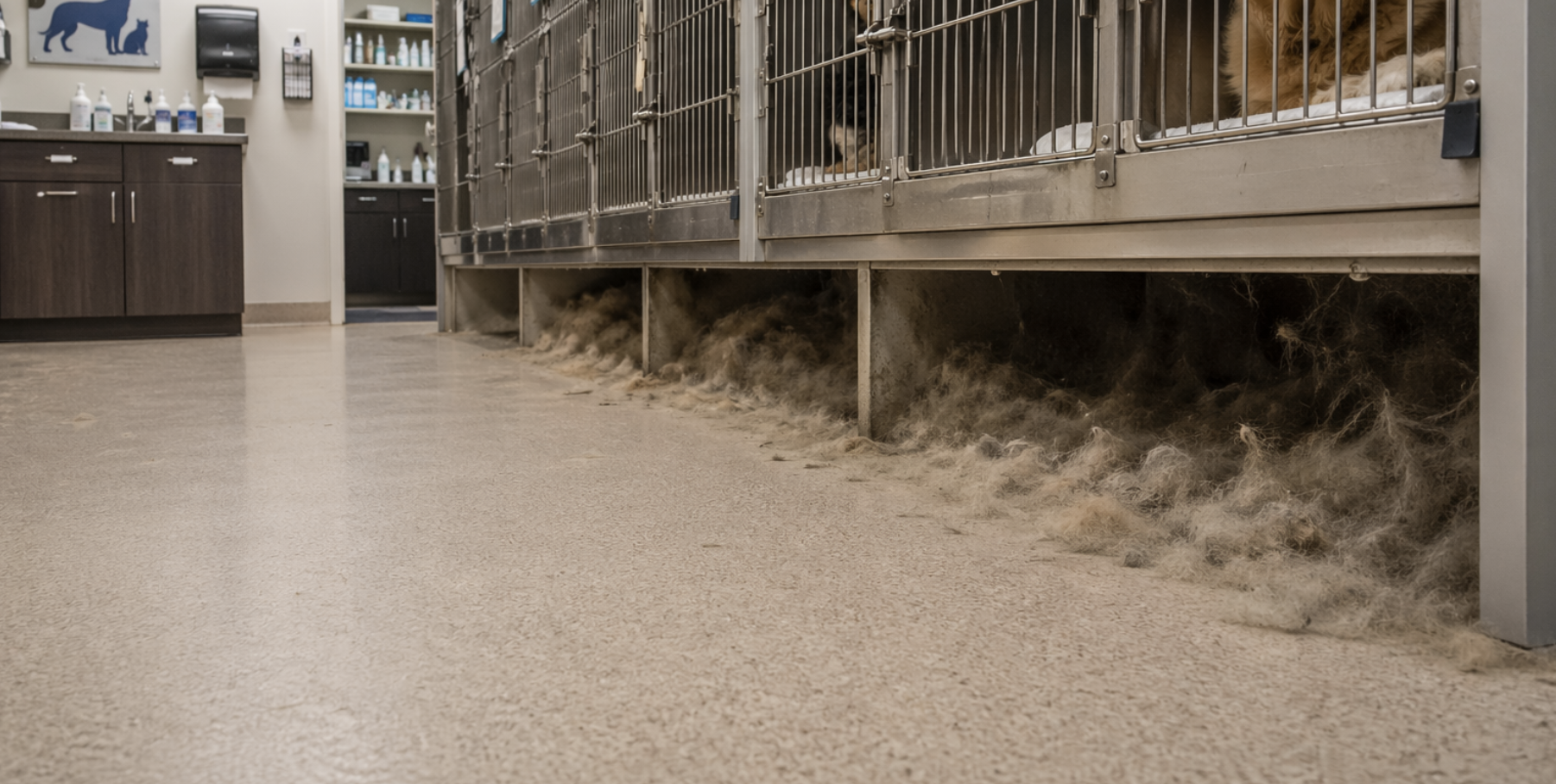
Common Indoor Air Quality Issues in Veterinary Clinics and Animal Facilities
Indoor air quality concerns in veterinary facilities often show up in a few specific ways.
Odor Buildup
Odors in veterinary settings are not always just a housekeeping issue. They may point to inadequate airflow, moisture problems, waste-related air concerns, or contamination trapped in enclosed spaces.
Animal Dander and Airborne Particulates
Hair, dander, and fine particulates can accumulate in high-occupancy spaces and circulate through treatment areas, boarding rooms, and shared ventilation zones if airflow is not working effectively.
Moisture and Mold Risk
Veterinary facilities frequently deal with repeated cleaning, wash-down activities, humidity, and occasional water intrusion. Over time, that can create conditions that support mold growth or persistent moisture-related indoor air quality problems.
Ventilation and Airflow Imbalances
Some facilities have certain rooms that feel stuffy, smell stronger, or hold humidity more than others. This can point to ventilation limitations, pressure issues, or uneven air movement throughout the building.
Cleaning Chemicals and Indoor Air Conditions
Disinfectants and cleaning agents are necessary in veterinary care environments, but their repeated use can also affect indoor air conditions, especially in enclosed spaces with poor ventilation.
Why Indoor Air Quality Matters for Staff, Animals, and Operations
Indoor air quality problems in veterinary facilities can affect more than just building comfort.
Staff Health and Workplace Experience
Veterinary teams spend long hours in these environments. Poor air quality can contribute to discomfort, irritation, fatigue, and ongoing complaints that affect day-to-day working conditions.
Patient Care Environments
Animals receiving treatment, recovering from procedures, or being housed in enclosed spaces may be more sensitive to environmental conditions than people realize. Controlled air conditions matter in spaces where health and recovery are already a concern.
Client Perception and Trust
Pet owners notice odors, stuffiness, visible moisture issues, and overall cleanliness. Even when care quality is high, poor indoor conditions can affect how the facility is perceived.
Operational Consistency
Unresolved indoor air quality concerns can lead to repeated complaints, staff frustration, inconsistent conditions between locations, and distractions that interfere with normal operations.
For veterinary groups trying to maintain consistency across multiple facilities, this becomes even more important. A more specialized veterinary indoor air quality testing can also support location-specific search visibility and conversion.
How Indoor Air Quality Testing Works for Veterinary Facilities
A professional indoor air quality assessment is designed to evaluate the actual conditions inside the facility and identify the sources contributing to concerns.
Depending on the site and the issue, that process may include:
Site Evaluation and Facility Review
A walkthrough of the facility to review layout, HVAC conditions, ventilation patterns, odor concerns, moisture-prone areas, and how different spaces are being used.
Moisture and Ventilation Assessment
Review of moisture conditions, humidity-related concerns, and ventilation effectiveness in treatment areas, kennels, wash spaces, boarding rooms, and other high-risk zones.
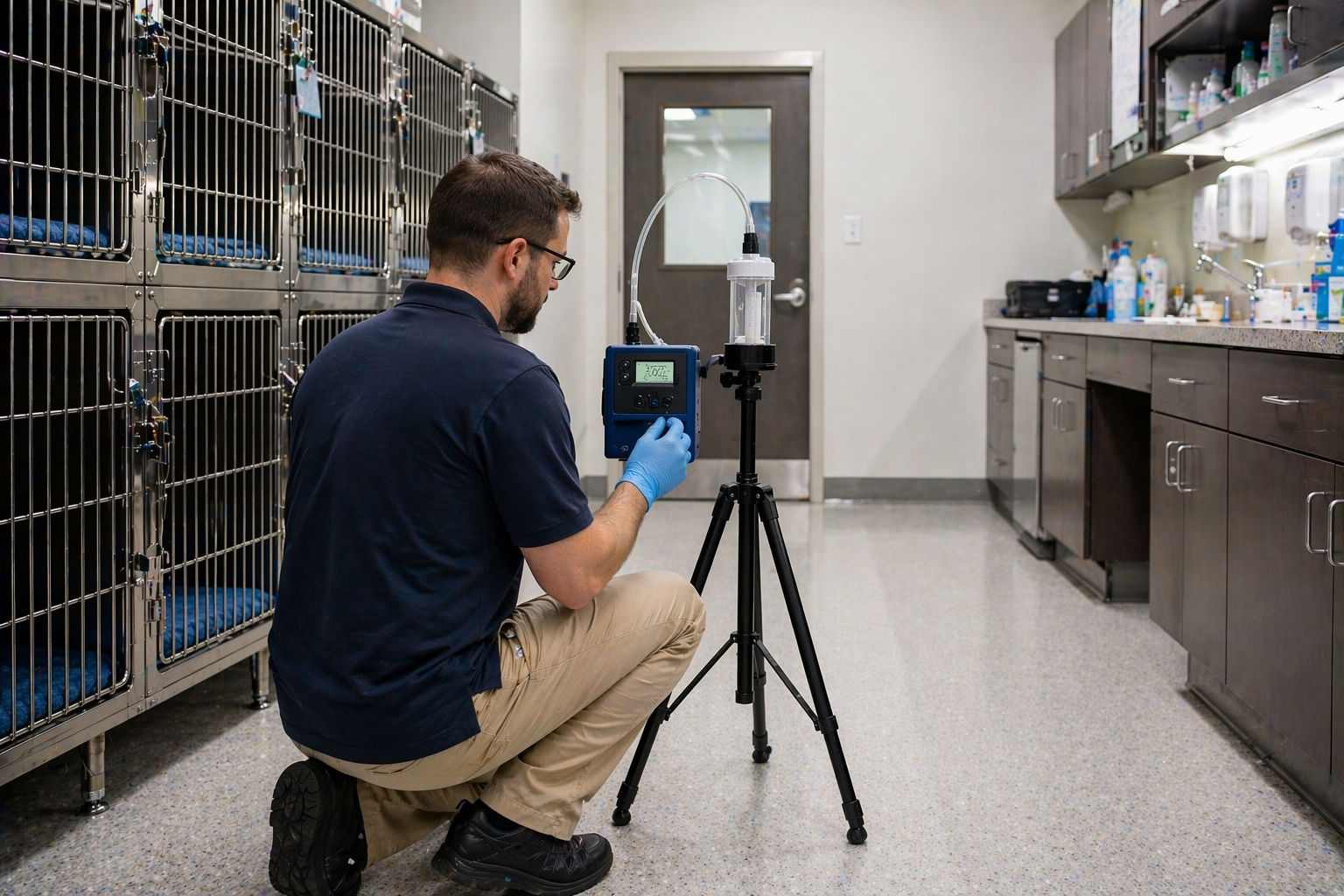
Targeted Air and Surface Sampling
Non-invasive sampling may be used based on site-specific conditions to evaluate mold spores, airborne particulates, microbial indicators, or other relevant indoor air quality concerns.
Data Analysis and Defensible Reporting
Findings are compiled into clear, defensible reporting that explains observed conditions, likely contributing factors, and practical next steps.
When to Schedule an IAQ Assessment for Your Facility
It may be time to schedule an indoor air quality assessment if:
Odors are persistent or difficult to control
Staff continue reporting air quality concerns
Moisture, condensation, or mold is suspected
A kennel, boarding, or treatment area feels consistently different from the rest of the building
Ventilation issues are affecting comfort or operations
Renovation work has recently occurred or is about to begin
You need documentation to better understand and address environmental concerns
The biggest mistake many facilities make is waiting until conditions become more disruptive. Early evaluation can help identify issues before they affect more areas of the building or create larger operational problems.

Noticing Air Quality Concerns in Your Veterinary Facility?
If your clinic is dealing with persistent odors, ventilation issues, humidity, or staff complaints, an indoor air quality assessment can help identify the source and provide clear, actionable next steps.