

Florida Phase I Environmental Site Assessments
Identify environmental risk early, protect your transaction, and move forward with clarity. CRB delivers ASTM E1527-21 compliant Phase I ESAs with the speed, precision, and defensibility required in today’s real estate market.
What Is A Phase I Environmental Site Assessment?
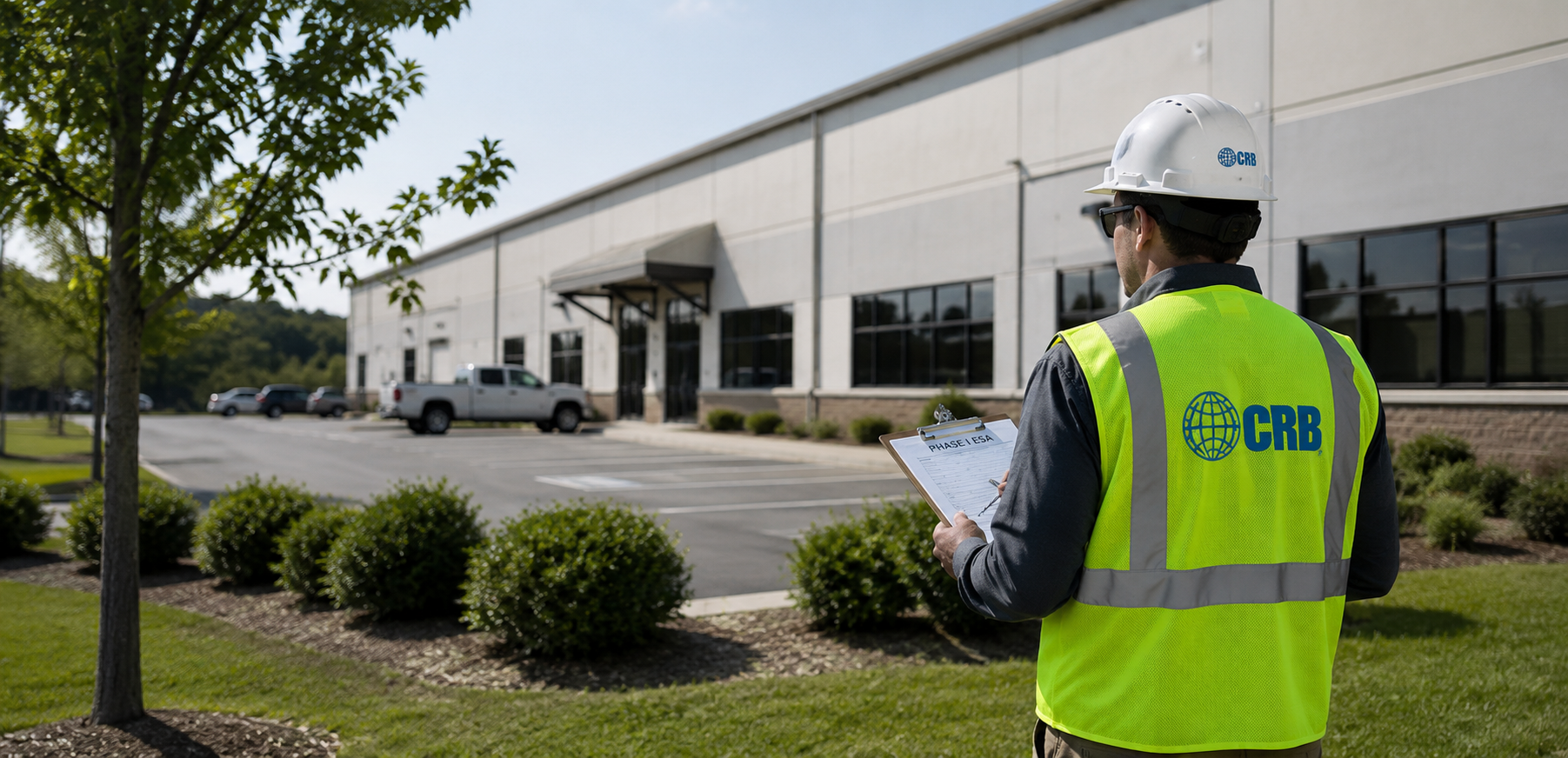
A Phase I Environmental Site Assessment is a non-intrusive environmental due diligence investigation conducted in accordance with ASTM E1527-21 standards and the United States Environmental Protection Agency's All Appropriate Inquiries (AAI) Rule.
The purpose of a Phase I ESA is to identify potential environmental conditions associated with a property that could impact ownership, redevelopment, financing, or future use.
A typical Florida Phase I Environmental Site Assessment includes:
Historical property use research
Regulatory database review
Site reconnaissance and property inspection
Evaluation of surrounding land uses
Environmental records review
Interviews with property owners, occupants, and local agencies
Identification of Recognized Environmental Conditions (RECs)
The findings help buyers, lenders, and stakeholders understand potential environmental liabilities before completing a transaction.
When Is A Phase I ESA Required In Florida?
A Phase I Environmental Site Assessment is commonly required during commercial real estate transactions throughout Florida when environmental due diligence is necessary to evaluate risk.
Many lenders, financial institutions, investors, and development teams require a Phase I ESA before financing or acquiring commercial property.
A Florida Phase I ESA is commonly performed for:
Commercial property acquisitions
Real estate refinancing
Development and redevelopment projects
Vacant land purchases
Industrial property transactions
Multifamily acquisitions
Portfolio transactions
Brownfield redevelopment projects
Former agricultural land redevelopment
Property transfers involving environmental risk concerns
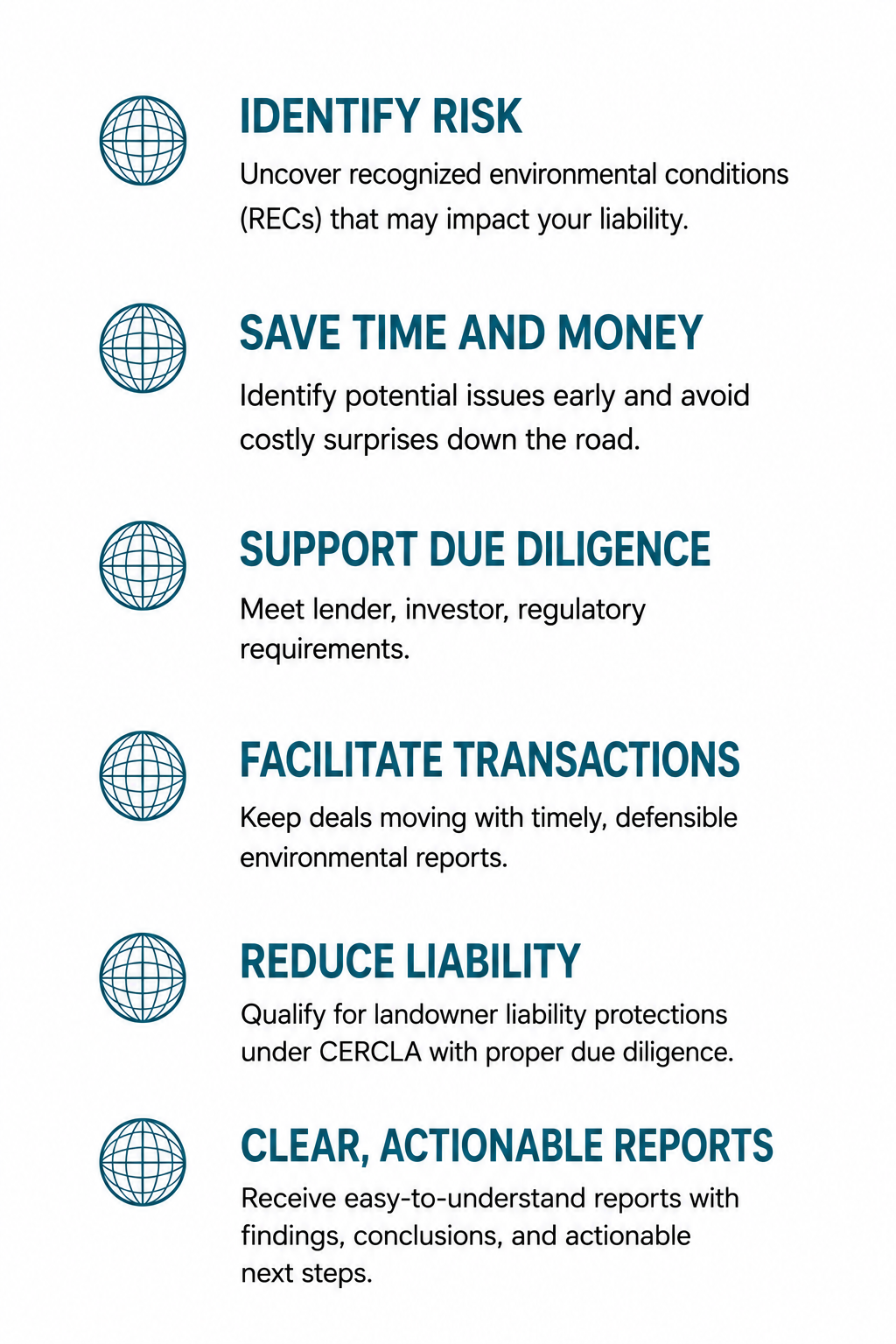
Completing a Phase I ESA before closing helps identify environmental concerns early and can reduce the likelihood of unexpected costs, delays, or regulatory issues later in the project.
Phase I ESA Services For
Lenders
Financial institutions frequently require Phase I Environmental Site Assessments as part of commercial lending due diligence. CRB provides lender-focused environmental reports that help support financing decisions while meeting ASTM and regulatory requirements.
Developers
Developers rely on Phase I ESAs to identify environmental conditions that may affect project feasibility, entitlement timelines, redevelopment planning, permitting, and construction schedules.
Attorneys
Real estate attorneys often engage environmental consultants to support transactions involving environmental liability concerns, regulatory review, property transfers, and risk management strategies.
Commercial Real Estate Investors
Investors use Phase I Environmental Site Assessments to evaluate environmental risk before acquisition and to better understand potential future obligations associated with a property.
Property Owners
Property owners may obtain a Phase I ESA before refinancing, redevelopment, disposition, or strategic planning activities involving commercial real estate assets.
Florida Properties Commonly Requiring Phase I Environmental Site Assessments
THE VALUE OF A PHASE I
Industrial Properties
Manufacturing facilities, warehouses, distribution centers, logistics facilities, and industrial parks often require environmental assessment due to historical industrial operations and potential environmental impacts.
Retail Properties
Shopping centers, mixed retail developments, fuel stations, automotive facilities, and commercial retail sites frequently require environmental review before acquisition or redevelopment.
Multifamily Properties
Apartment communities, workforce housing developments, and multifamily redevelopment projects often require lender environmental due diligence and environmental risk assessment.
Mixed-Use Developments
Mixed-use projects commonly involve historical property uses that require careful environmental review before redevelopment proceeds.
Vacant Land
Vacant land may appear low-risk but often requires environmental investigation to evaluate historical land uses, fill material concerns, former site activities, and redevelopment suitability.
Agricultural Redevelopment Property
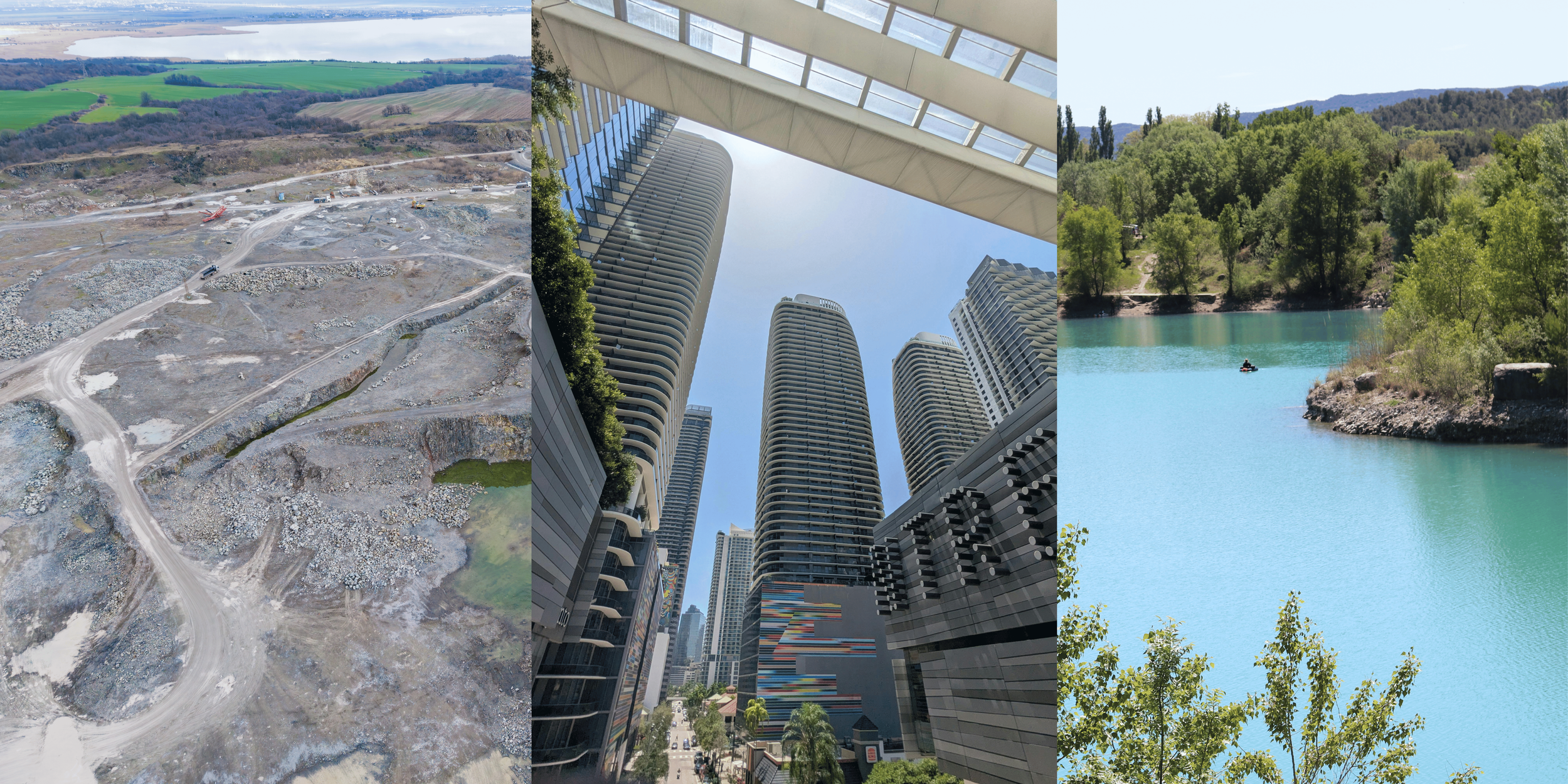
Former agricultural land throughout Florida may require additional environmental review due to historical pesticide use, herbicide applications, agricultural chemical storage, equipment maintenance activities, and regulatory considerations associated with redevelopment.
Florida Environmental Considerations
Environmental conditions in Florida often differ from those found in other regions of the country. Local environmental history, geology, land use patterns, and regulatory considerations frequently influence the environmental due diligence process.
Historical Agricultural Land
Throughout South Florida, Central Florida, and agricultural regions of the state, former groves, nurseries, farms, and agricultural operations may present environmental considerations that require further review during redevelopment planning and acquisition due diligence.
Brownfield Redevelopment
Many urban redevelopment projects involve properties with historical commercial or industrial uses that may warrant additional environmental investigation.
Former Fuel Stations
Historical fuel dispensing operations can present potential concerns involving petroleum-related impacts that require evaluation during environmental due diligence.
Dry Cleaners
Former dry-cleaning facilities are frequently identified during Phase I ESA investigations due to historical solvent use and potential environmental impacts.
Industrial Corridors
Many Florida industrial areas contain historical manufacturing, transportation, warehousing, marine, and industrial operations that warrant environmental review.
Shallow Groundwater Conditions
Florida's geology often includes shallow groundwater conditions that can influence environmental investigations and redevelopment planning.
Coastal Development Considerations
Properties located in coastal areas may involve additional environmental considerations associated with historical site activities, redevelopment planning, and environmental permitting requirements.
Understanding these regional environmental conditions is one of the reasons local Florida environmental experience can be valuable during the due diligence process.
Related Environmental Services
Commercial Phase I Environmental Site Assessments
Commercial Phase II Environmental Site Assessments
Environmental Remediation & Corrective Action
Environmental Regulatory Compliance Services
Agricultural Land Environmental Assessments
Miami Environmental Consulting Services
South Florida Environmental Consulting Services
Florida Phase I ESA Frequently Asked Questions
-
A Phase I ESA is a non-invasive environmental study conducted to identify potential contamination risks on a property in accordance with ASTM E1527-21 standards.
-
Most Phase I ESAs are completed within 2 to 4 weeks, depending on site complexity and scope.
-
Costs typically range from $2,200 to $3,200 for standard commercial properties, with higher costs for complex or industrial sites.
-
If potential contamination is identified, a Phase II ESA may be recommended to confirm conditions through sampling and analysis.
-
Not all transactions require a Phase I ESA, but most lenders strongly recommend or require it for commercial real estate financing.
-
Recognized Environmental Conditions (RECs) are the primary findings of a Phase I Environmental Site Assessment. They indicate the presence or likely presence of hazardous substances or petroleum products on a property due to past or current use.
RECs matter because they directly impact:
Environmental liability for buyers and property owners
Lender risk and financing decisions
Whether additional investigation, such as a Phase II ESA, is required
Identifying RECs early allows stakeholders to make informed decisions, negotiate terms, or address potential issues before they affect the transaction.
Keep Your Transaction Moving
CRB performs ASTM E1527-21 compliant Phase I Environmental Site Assessments throughout Florida, South Carolina, Idaho, and nationwide commercial real estate markets.