
Why Former Agricultural Land in Miami-Dade Often Triggers Additional Environmental Review During Redevelopment
For developers, investors, lenders, attorneys, and landowners operating in South Florida, understanding how historical agricultural land use can impact redevelopment has become increasingly important.
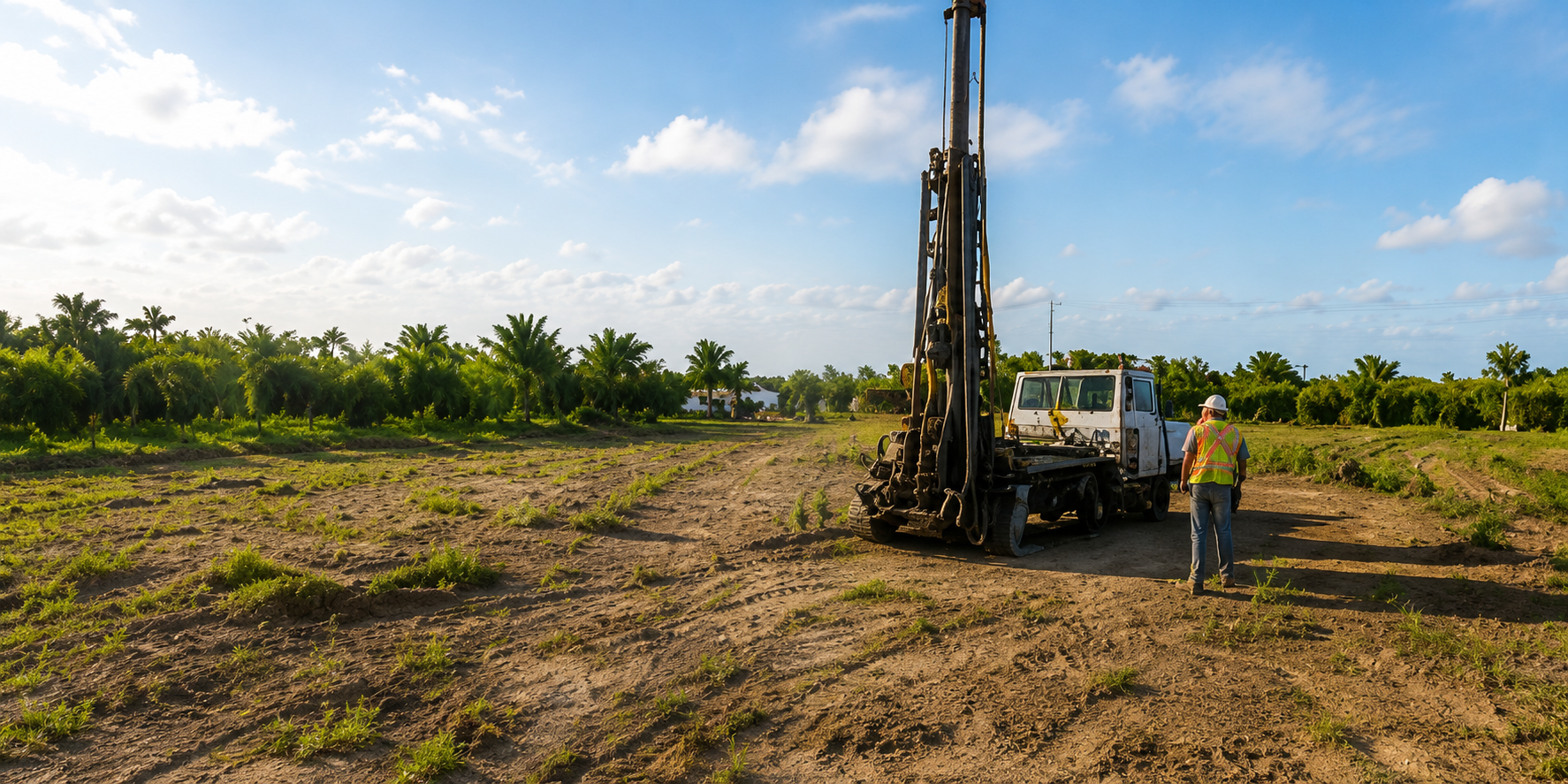
South Florida redevelopment continues pushing further into historically agricultural areas throughout Miami-Dade County, particularly in Homestead, Redland, and surrounding redevelopment corridors where former farmland, nurseries, groves, and agricultural properties are being evaluated for commercial, industrial, mixed-use, and residential development.
One issue we frequently see during redevelopment planning is developers discovering that historical agricultural land use can create additional environmental review requirements during permitting, entitlement coordination, financing, or redevelopment due diligence.
In many cases, these concerns are not identified until a project is already moving forward.
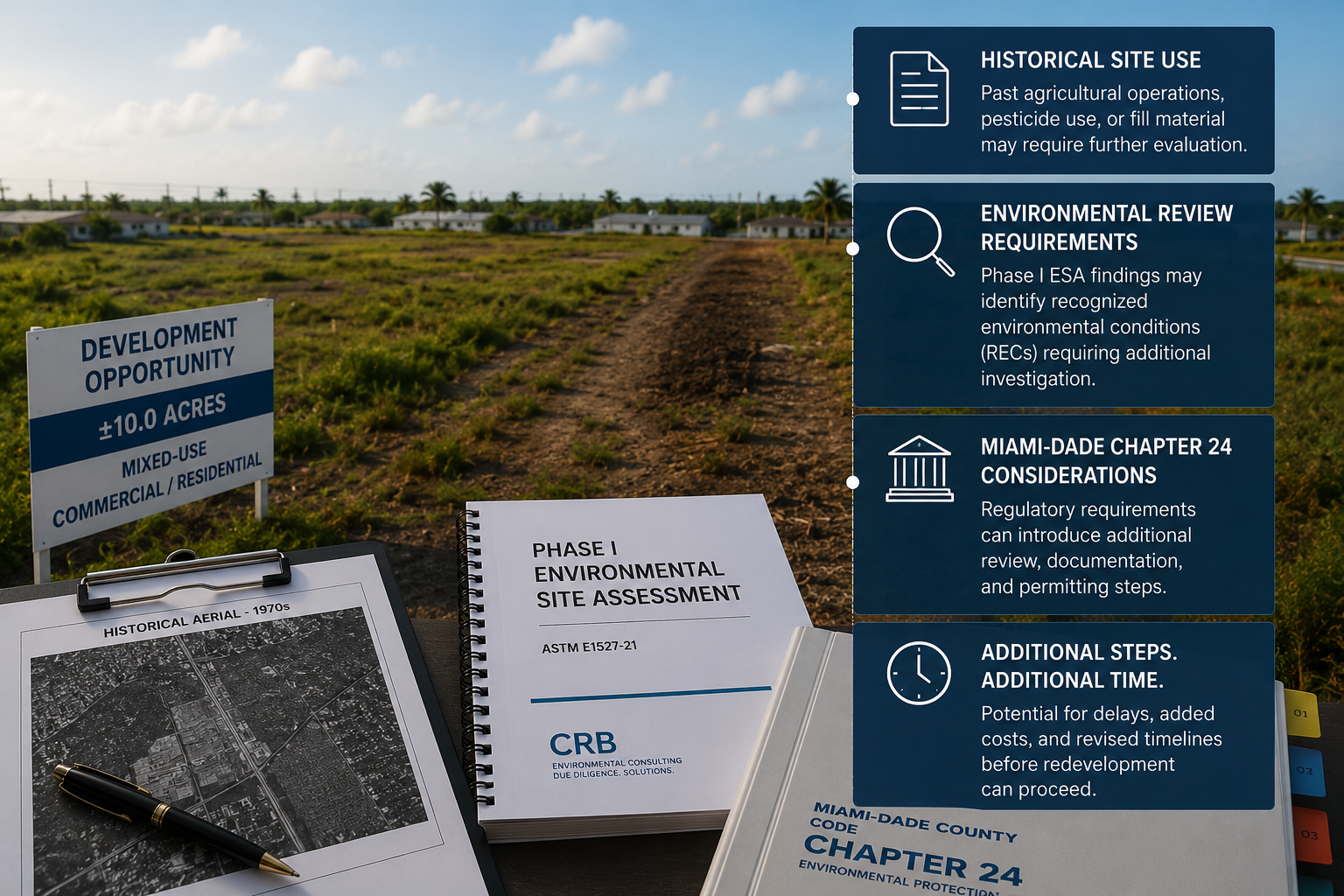
A property may appear developable on the surface, but historical site use, environmental review requirements, or Miami-Dade Chapter 24 considerations can introduce additional steps before redevelopment can proceed.
Large portions of Miami-Dade County were historically used for agricultural operations long before many of today’s redevelopment projects began moving south and west throughout the county.
Former uses may include:
row crops
nurseries
groves
packing operations
agricultural storage
equipment maintenance areas
pesticide and herbicide application areas
irrigation infrastructure
fuel storage associated with farming operations
As redevelopment expands into these areas, historical land use often becomes a larger part of environmental due diligence and redevelopment planning.
In many cases, developers purchasing former agricultural land may not initially realize the extent of historical agricultural activity that previously occurred on the property.
This is especially common on properties that have changed ownership multiple times, sat vacant for years, or transitioned from agricultural use into partially developed or transitional land.
Miami-Dade Has A Long History Of Agricultural Land Use
A Common Redevelopment Scenario We See In South Florida
We often see redevelopment teams purchase former agricultural land assuming the property is ready to move directly into permitting, only for historical land use concerns to surface later during environmental review, lender due diligence, or redevelopment planning.
In many cases, the property may initially appear straightforward from a development perspective. However, once environmental due diligence, permitting coordination, land disturbance review, or historical records evaluation begins moving forward, additional environmental considerations tied to former agricultural use can become part of the redevelopment process.
Depending on the property history and redevelopment plans, this may include additional environmental review, coordination associated with Miami-Dade Chapter 24 requirements, targeted investigation, or further evaluation before redevelopment can fully proceed.
This is one reason environmental due diligence early in the acquisition and redevelopment planning process has become increasingly important throughout South Florida redevelopment corridors.
Why Former Agricultural Properties Sometimes Trigger Additional Environmental Review
Not every former agricultural property presents environmental concerns, and not every redevelopment project requires additional investigation.
However, depending on the property history, site conditions, redevelopment plans, and findings identified during due diligence, additional environmental review may become necessary.
Some concerns that can surface during redevelopment include:
historical pesticide or herbicide use
undocumented fill material
groundwater impacts
former fuel storage areas
agricultural chemical storage
equipment maintenance areas
buried debris or undocumented site conditions
historical environmental records tied to prior land use
In South Florida, these issues often surface during:
permitting review
redevelopment planning
land disturbance activities
tree removal applications
entitlement coordination
lender environmental due diligence
environmental review associated with Miami-Dade Chapter 24 requirements
Depending on site conditions and redevelopment plans, some projects may also require environmental remediation or corrective action planning before redevelopment can fully proceed.
How Miami-Dade Chapter 24 Can Impact Redevelopment Projects
Miami-Dade Chapter 24 environmental regulations can play a significant role in redevelopment projects involving former agricultural land.
Depending on the property history and redevelopment scope, environmental review associated with Chapter 24 requirements may become part of the redevelopment process.
This is particularly important for projects involving:
land use conversion
redevelopment of former farmland
significant site disturbance
grading activities
infrastructure installation
redevelopment permitting
environmental review requested by Miami-Dade DERM
This does not automatically mean contamination is present or that remediation will be required. However, environmental regulatory compliance and permitting review can become an important part of redevelopment planning, particularly with historical land use.
Why Environmental Issues Are Often Discovered After Acquisition
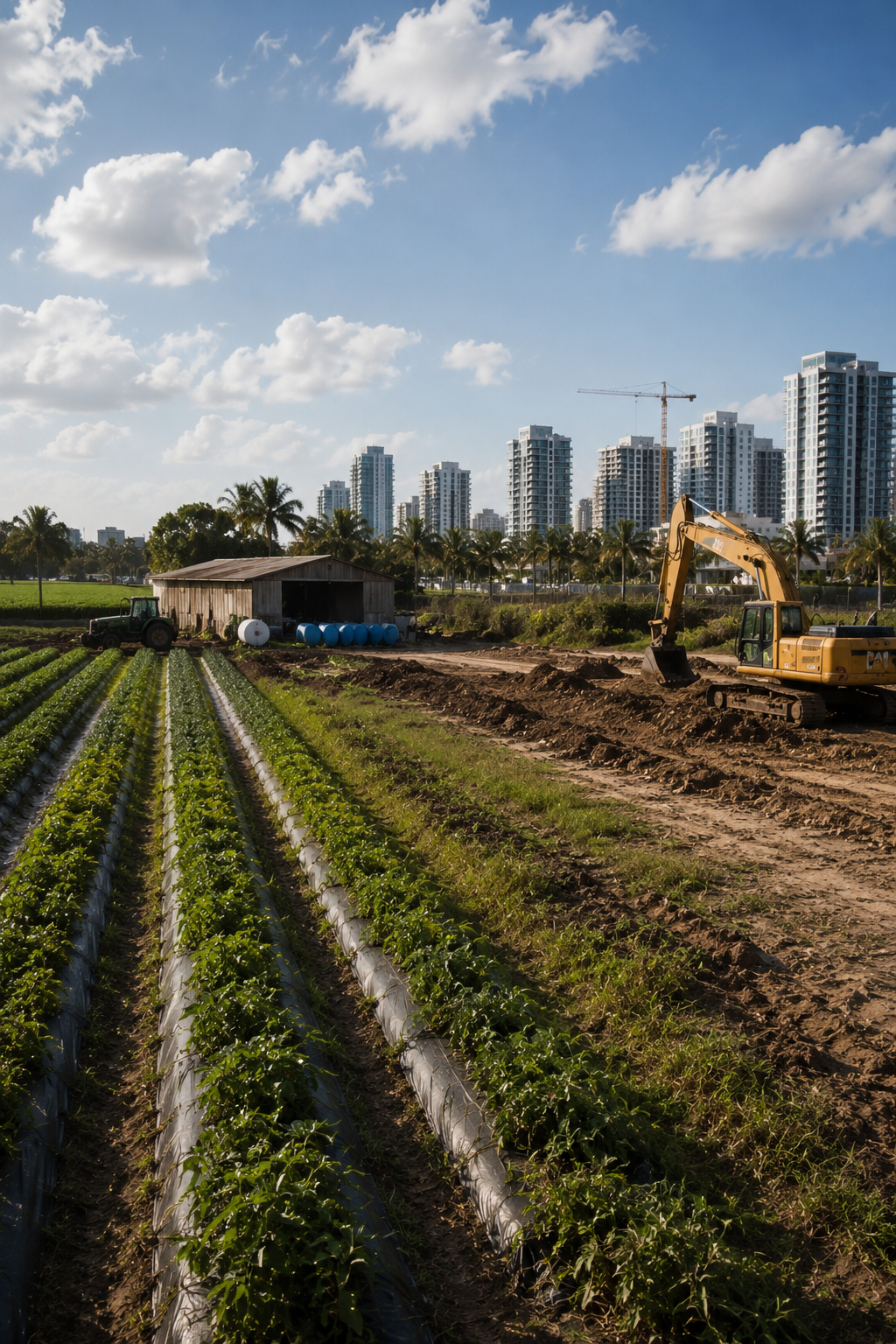
One of the most common redevelopment challenges we see in South Florida is environmental concerns being identified after a property has already been purchased or redevelopment planning has already begun.
This can happen for several reasons.
Historical agricultural operations are not always obvious from current site conditions. A property that appears vacant today may have decades of agricultural use history that is not immediately visible during early acquisition discussions.
In other situations:
historical records are incomplete
redevelopment timelines move faster than due diligence
permitting review reveals additional concerns
lenders request additional environmental review
Phase I ESA findings identify recognized environmental conditions (RECs)
site observations trigger further evaluation
Once redevelopment planning, permitting, or financing is already underway, additional environmental review can create unexpected project delays, revised timelines, additional investigation requirements, or further coordination with regulatory agencies.
This is why early environmental due diligence is becoming increasingly important throughout South Florida redevelopment.
The Role Of A Phase I Environmental Site Assessment (Phase I ESA)
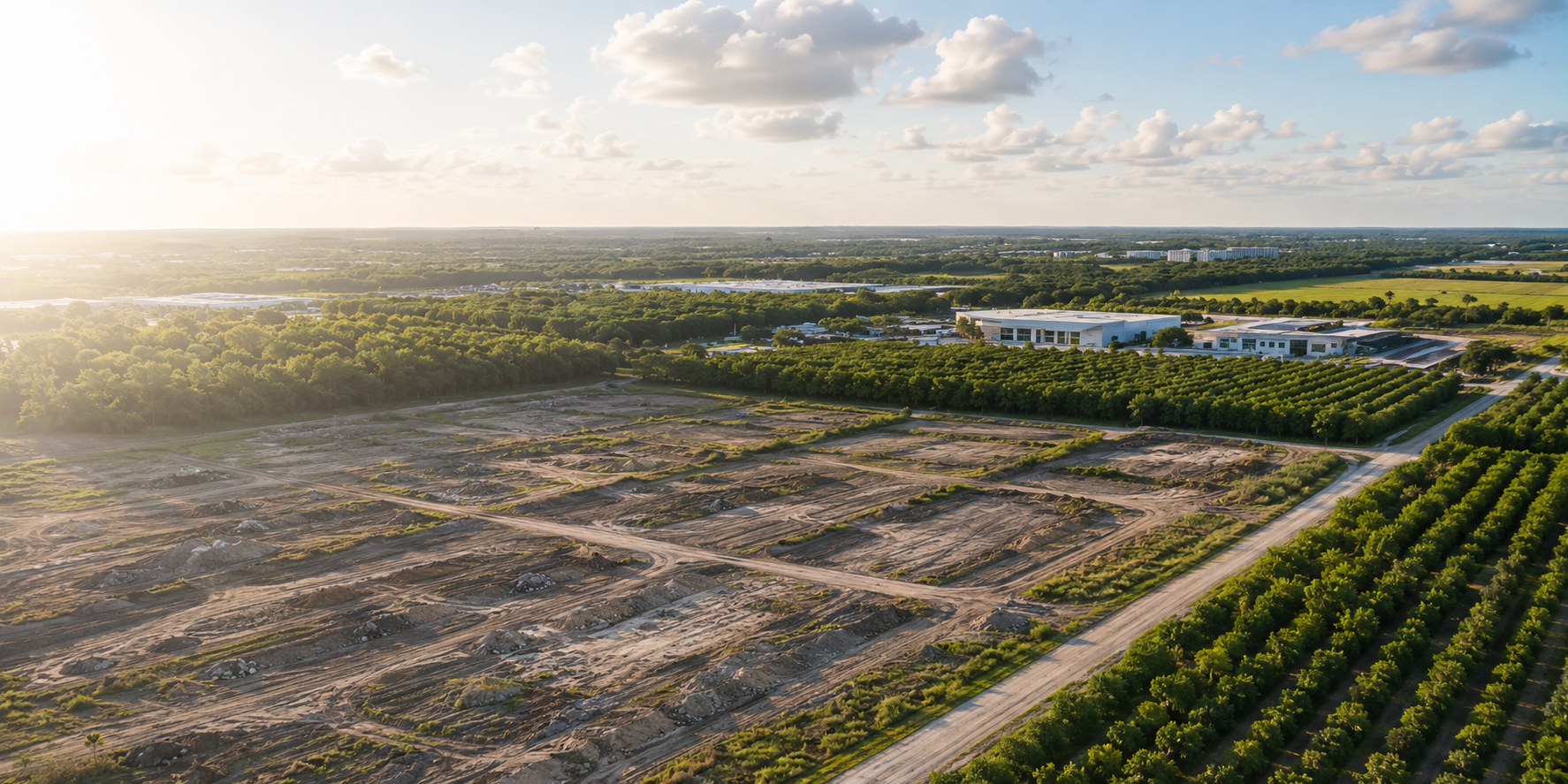
For many redevelopment projects involving former agricultural land, a Phase I Environmental Site Assessment (Phase I ESA) becomes a critical part of environmental due diligence.
A Phase I ESA is performed in accordance with ASTM E1527-21 standards and is designed to evaluate current and historical environmental conditions associated with a property.
The assessment typically includes:
historical records review
environmental database review
site reconnaissance
evaluation of historical aerials and land use
interviews and regulatory review where applicable
identification of Recognized Environmental Conditions (RECs)
For former agricultural properties, the Phase I ESA often becomes one of the first opportunities to better understand:
historical land use
prior agricultural operations
potential environmental concerns tied to the site history
whether additional environmental evaluation may be appropriate
In some cases, findings identified during a Phase I ESA may lead to recommendations for targeted additional investigation, including soil mapping, groundwater assessment, or a more comprehensive Phase II Environmental Site Assessment.
This does not happen on every project, but it is a common part of redevelopment due diligence when historical agricultural use is involved.
Why Early Environmental Due Diligence Matters
In South Florida redevelopment, timing matters.
Environmental concerns identified early in the acquisition or planning process are typically far easier to evaluate and manage than issues discovered after permitting, financing, or redevelopment timelines are already in motion.
Developers, lenders, attorneys, brokers, and landowners are increasingly recognizing the value of early environmental due diligence for:
redevelopment planning
acquisition strategy
lender coordination
permitting preparation
risk management
entitlement support
identifying potential environmental constraints before project delays occur
As redevelopment continues expanding throughout Miami-Dade County and historically agricultural areas continue transitioning into new commercial and residential uses, environmental review associated with former agricultural land redevelopment will likely continue becoming a larger part of the development process.
Environmental Consulting For Former Agricultural Land Redevelopment In South Florida
CRB provides environmental consulting services for redevelopment projects throughout Miami-Dade County and South Florida, including environmental due diligence support associated with former agricultural properties, redevelopment planning, and Miami-Dade Chapter 24 environmental considerations.
Our team supports:
developers
landowners
commercial real estate professionals
lenders
attorneys
entitlement consultants
redevelopment teams
with ASTM E1527-21 compliant Phase I ESA services, Phase II environmental investigations, soil and groundwater assessment, environmental due diligence, redevelopment environmental review and environmental consulting associated with permitting and redevelopment planning
As redevelopment activity continues expanding into historically agricultural areas throughout South Florida, understanding historical site conditions early can play an important role in helping projects move forward with greater clarity and fewer unexpected environmental obstacles.
Frequently Asked Questions About Former Agricultural Land Redevelopment In Miami-Dade
-
In many South Florida redevelopment projects, historical agricultural land use is not immediately obvious during the acquisition phase. Environmental concerns often surface later once permitting review, redevelopment planning, lender due diligence, land disturbance activities, or environmental review associated with Miami-Dade regulations begins moving forward in greater detail.
-
Depending on the property history, redevelopment scope, and permitting requirements, activities such as tree removal, grading, land clearing, or site disturbance may lead to additional environmental review or coordination during the redevelopment process. This is especially common on historically agricultural properties undergoing land use transition or redevelopment.
-
Environmental due diligence may include review of historical agricultural activities such as nurseries, groves, row crops, agricultural chemical storage, irrigation infrastructure, fuel storage areas, equipment maintenance operations, and other historical site uses that could influence redevelopment planning or environmental review requirements.
-
Many lenders require a Phase I Environmental Site Assessment (Phase I ESA) as part of environmental due diligence for commercial real estate transactions, redevelopment financing, acquisitions, or land purchases involving former agricultural property. The assessment helps evaluate current and historical environmental conditions associated with the site in accordance with ASTM E1527-21 standards.
-
If environmental concerns are identified during redevelopment planning or environmental due diligence, additional evaluation, environmental coordination, or targeted investigation may become necessary depending on the site conditions and redevelopment plans. Identifying these concerns early often helps developers, landowners, and project teams better manage timelines, permitting coordination, and redevelopment planning moving forward.